
Goldshower
Thryallis glauca
Description
Growing requirements
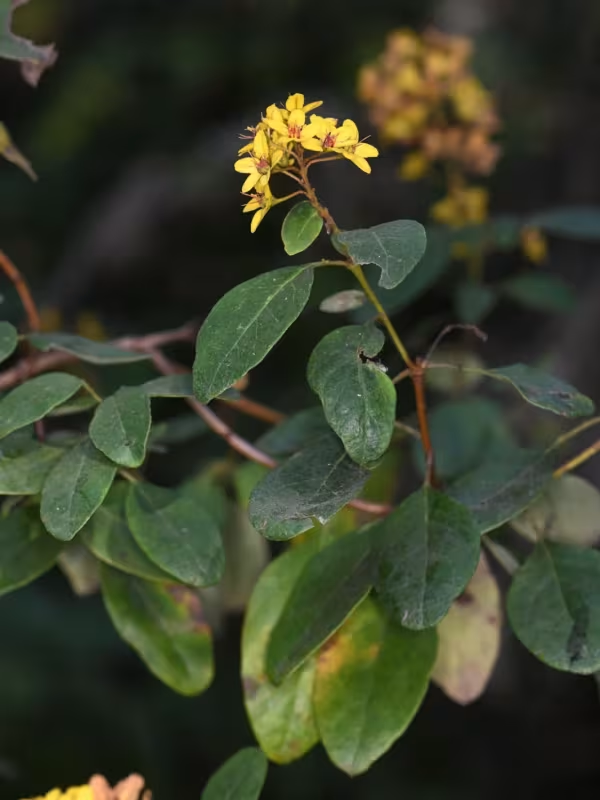
Goldshower (Thryallis glauca), also known as Galphimia glauca, is a woody evergreen shrub belonging to the Malpighiaceae family. It is native to Central America and Mexico, widely cultivated for its ornamental value.
The plant thrives in full sun conditions, which are essential for profuse flowering. While it adapts to various climates, it requires protection from severe frost, as it is native to warm, tropical environments.
Well-draining soil is the most critical factor for successful cultivation. The shrub tolerates a range of soil types, provided that water does not accumulate around the root zone to prevent rot.
Irrigation should be consistent, especially during the establishment phase and peak summer temperatures. Once matured, the shrub shows moderate drought tolerance, although optimal growth requires adequate moisture.
Pruning is a vital horticultural practice for this species. Removing spent flower spikes and thinning out old branches encourages the production of new growth and maintains the shrub's desired landscape form.
Main diseases and pests
Spider mites are the most common pests affecting Thryallis glauca, particularly in dry and hot conditions. These insects puncture the leaves, causing stippling and eventual chlorosis.
Mealybugs can also infest the foliage, hiding in leaf axils. Management involves applying horticultural oils or systemic insecticides, ensuring thorough coverage of all plant surfaces during treatment.
Root rot caused by Pythium or Phytophthora species often occurs if the soil is poorly drained or if the plant is overwatered. Improving soil aeration is the primary corrective measure.
Nutritional deficiencies, specifically iron chlorosis, can occur in alkaline soils. Applying chelated micronutrients often restores the natural deep green color of the leaves.
Good cultural practices, such as maintaining proper plant spacing and removing debris from the base, are essential to prevent the spread of fungal pathogens and maintain plant vigor.