
Agave univittata
Agave univitatta Haw.
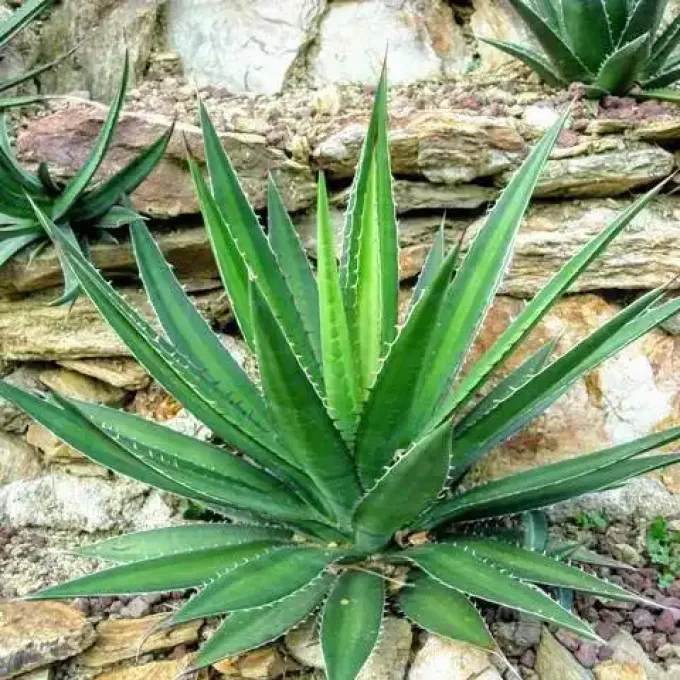
Description
Growing requirements
Agave univittata is a perennial succulent belonging to the Asparagaceae family. Native to the arid regions of Mexico, this species is well-adapted to surviving in harsh environments characterized by rocky terrain, high solar radiation, and limited annual precipitation.
Botanically, the plant is distinguished by a dense basal rosette of stiff, succulent leaves. A hallmark feature is the distinct central white or creamy stripe running along the leaf length. The leaf margins are typically armed with sharp spines, providing protection against herbivores.
Regarding climate requirements, the plant thrives in areas with abundant sunshine and warm temperatures. It requires a well-draining soil mix to prevent water stagnation. In cooler climates, it must be grown in greenhouses or as a container plant that can be moved indoors during frost.
Soil quality for Agave univittata should be porous and gritty, mimicking its natural habitat. It prefers a neutral to slightly alkaline pH. Excessive fertilization is usually discouraged, as it can cause rapid, structurally weak growth that reduces the plant's resilience.
Its primary use is ornamental, often utilized in xeriscaping or as a focal point in succulent collections. The architectural form and the unique variegation of the leaves make it a highly desirable species for landscape architects and botanical garden curators.
Main diseases and pests
The most significant threat to Agave univittata cultivation is the development of fungal infections, particularly root rot, induced by waterlogged conditions. The pathogen attacks the vascular system, causing the plant to collapse from the base upwards.
Pests such as mealybugs are frequent intruders, hiding in the tight crevices between the leaves. They feed on plant sap, and their presence is often indicated by white, cotton-like masses, which can weaken the plant and encourage secondary infections.
Spider mites are another common pest, thriving in dry, hot conditions. They cause characteristic stippling on the leaves, leading to yellowing and premature death of the foliage if left untreated for an extended period.
Scale insects can also infest the plant, creating hard protective shells on the leaf surfaces. These pests extract essential nutrients, causing stunted growth and potential cosmetic damage that is difficult to reverse once it becomes widespread.
Management of these threats involves a combination of cultural practices, such as proper spacing for air circulation, and chemical interventions when necessary. Consistent monitoring and quarantine of new plant material are essential for long-term health.