
Kamchatka rhododendron
Therorhodion camtschaticum
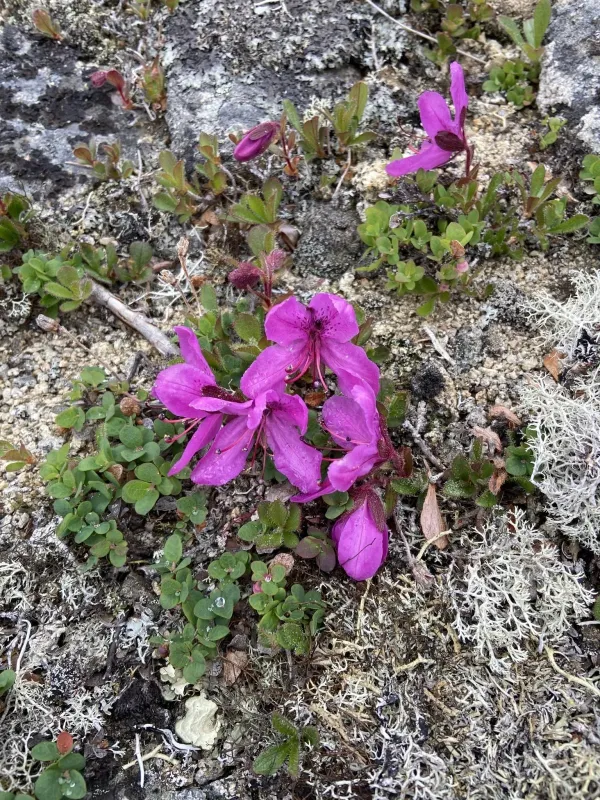
Description
Growing requirements
The Kamchatka rhododendron (Therorhodion camtschaticum) belongs to the Ericaceae family. It is a unique deciduous dwarf shrub native to the alpine and tundra regions of the North Pacific rim, including Alaska and Eastern Asia.
The species thrives in cold, moist climates and is highly adapted to short growing seasons. In cultivation, it requires precise microclimatic conditions, as it is intolerant to high summer heat and stagnant, warm soil moisture.
Successful development of this plant requires a well-draining, acidic growing medium with a pH range of 4.5 to 5.5. A mixture of peat, pine bark, and coarse sand provides the necessary structure to support healthy root development.
Agronomic management focuses on consistent moisture levels without waterlogging. Irrigation must be performed using soft, acid-balanced water, as alkaline tap water rapidly leads to nutrient deficiencies and leaf chlorosis.
Its primary use is in specialized rock gardens and alpine plant collections. The plant is valued for its vibrant flowers and compact growth habit, making it an excellent candidate for landscape projects in cooler horticultural zones.
Main diseases and pests
Root rot, particularly caused by Phytophthora species, is the most common and devastating disease for this culture. It is almost exclusively caused by poor soil drainage and excessive soil moisture during the warmer months.
Pests such as spider mites and scale insects can attack the foliage during periods of low humidity. These pests can rapidly weaken the plant, necessitating prompt intervention with mild, systemic insecticides or horticultural oils.
Nutrient toxicity is a significant risk, especially when traditional garden fertilizers are used. The plant has a very low requirement for mineral nutrients and is sensitive to salt accumulation, which can burn the delicate root system.
Leaf scorch occurs if the plant is exposed to direct midday sun, especially in warmer latitudes. Proper site selection in a north-facing position or under light canopy shade is essential for long-term survival.
Mechanical damage to the roots during weeding represents a persistent threat. Because the root system is fibrous and shallow, cultivation should be avoided; mulching is the preferred method for controlling weeds around the plant.