
Thellungiella salsuginea
Thellungiella salsuginea
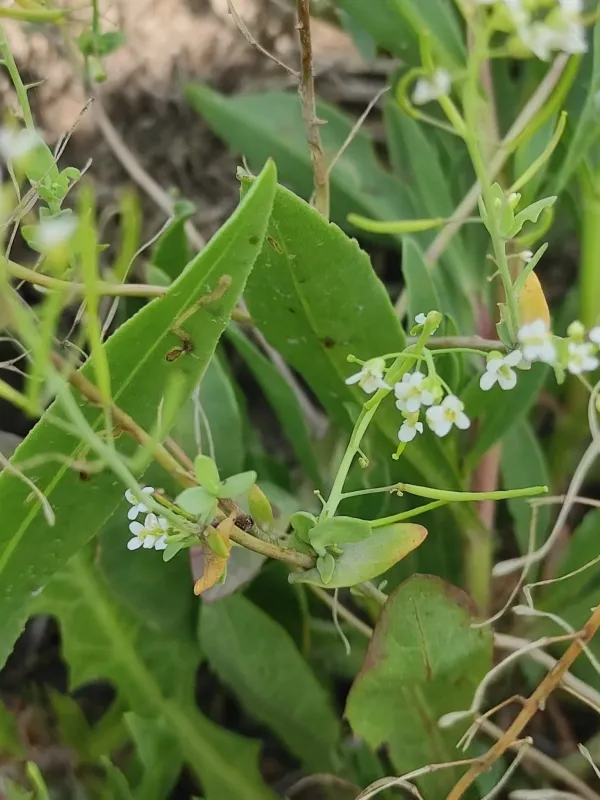
Description
Sowing dates
Thellungiella salsuginea, a member of the Brassicaceae family, is a highly adaptive species. Sowing should take place in early spring once soil temperatures reach 8–10 degrees Celsius to ensure optimal germination.
The seeds possess a natural dormancy that can be broken by cold stratification, which significantly improves the uniformity of seedling emergence in the field.
Planting is best performed in rows with a spacing of 15–20 centimeters, allowing each plant sufficient space for root development and nutrient uptake.
The seeding depth should be shallow, approximately 0.5–1 centimeter, as the small seeds lack the energetic reserves to emerge from deeper soil layers.
Adequate soil moisture during the first two weeks post-sowing is crucial to prevent the seeds from drying out, which is the most common cause of early crop failure.
Growing requirements
As a natural halophyte, this crop thrives in saline soils where traditional agricultural species fail, making it a critical model for reclaiming degraded land.
The plant demonstrates exceptional tolerance to osmotic stress caused by high concentrations of chloride and sulfate ions in the soil solution.
Full sun exposure is a requirement for the metabolic processes of Thellungiella; therefore, cultivation should be restricted to open fields without tree canopy interference.
Neutral to slightly alkaline pH levels are preferred, although the species shows high plasticity regarding soil chemical composition and salt fluctuations.
While salt-tolerant, the crop still requires essential nitrogen, phosphorus, and potassium inputs to maximize biomass production and seed yield quality.
Yield
The biomass yield of Thellungiella salsuginea is currently optimized for research and seed multiplication, showing significant potential for sustainable saline agriculture.
As a green manure or cover crop, it can effectively stabilize soil structure while maintaining productivity under conditions that are toxic to other vegetation.
Controlled irrigation with brackish water can be used to stimulate vegetative growth, provided the salt concentration does not exceed the plant's saturation threshold.
The harvest index is high due to the plant's ability to allocate significant energy towards silique formation, leading to a prolific output of small, viable seeds.
Yield management requires careful monitoring of plant density, as overcrowding can lead to suppressed seed production and increased susceptibility to disease.
Main diseases and pests
Pest pressure is primarily driven by classic cruciferous insects, with flea beetles posing the most significant risk during the delicate seedling stage.
Powdery mildew is a frequent issue in regions with high humidity, particularly if the canopy is too dense, reducing airflow around the plants.
Root rot diseases are more prevalent in poorly drained soils where water stagnation occurs, even if the plant is inherently tolerant to saline environments.
Aphids can cause significant damage during the flowering phase by feeding on the buds, which often results in reduced seed set and distorted fruit development.
- Flea beetles
- Powdery mildew
- Aphids
- Root rot
Harvesting
Harvesting should be timed for full maturity, indicated by the browning of siliques and a distinct drop in plant moisture content throughout the field.
Early morning harvesting is recommended to prevent shattering losses, as mature siliques are prone to splitting open when exposed to high midday heat.
Mechanical harvesting via combine is possible; however, settings must be adjusted for fine seeds to minimize debris contamination and post-harvest cleaning efforts.
Once collected, seeds must be dried immediately in a ventilated, low-humidity environment to prevent mycotoxin development and maintain long-term viability.
Proper storage in airtight containers at cool temperatures will ensure that the genetic integrity and germination vigor of the seeds are preserved for the next season.