
Thelionema grande
Thelionema grande
Description
Growing requirements
Thelionema grande is a perennial herbaceous plant belonging to the Asphodelaceae family. Native to the eastern regions of Australia, this species has evolved to thrive in rugged, rocky environments, showcasing a high degree of specialization to its natural habitat.
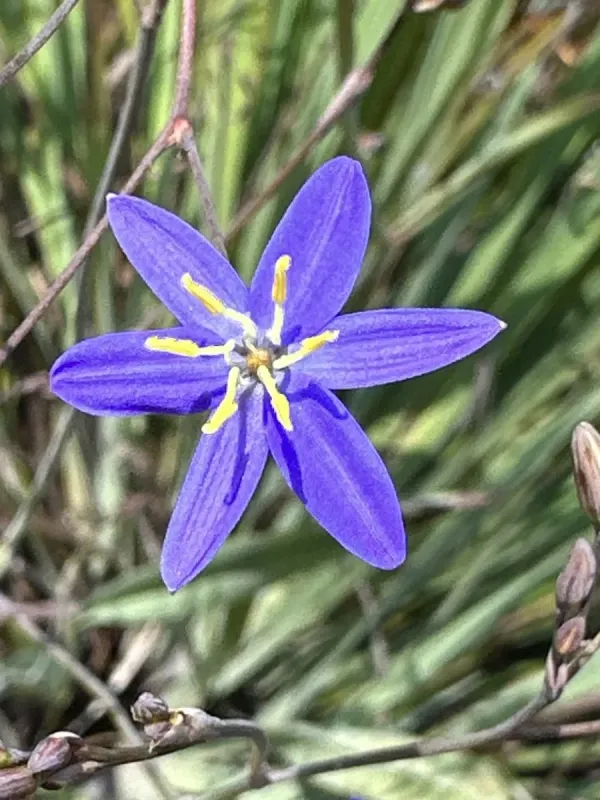
Botanically, the plant is identified by its basal rosette of rigid, strap-like leaves and a distinct flowering scape that carries dense, head-like clusters of vibrant blue to violet flowers. The root system consists of thickened, fleshy roots which allow the plant to store nutrients and moisture during periods of physiological stress.
Cultivation requirements for Thelionema grande prioritize excellent drainage. In a garden setting, it should be planted in gritty or sandy soil mixes that mimic its native rocky outcrops. Water management is critical; the substrate must be kept moist but never waterlogged to prevent root system collapse.
Regarding climate, the plant favors temperate to subtropical conditions with ample light. While it is reasonably adaptable, it performs best in positions where it receives bright, indirect morning sun and protection from the intense heat of the afternoon. It is not cold-hardy and should be protected from frost in non-native regions.
In terms of agricultural and horticultural use, this species is primarily valued as an ornamental addition to rockeries and specialized botanical collections. Its striking inflorescences and structural foliage make it a desirable candidate for drought-tolerant xeriscaping projects in suitable climates.
Main diseases and pests
The most significant threats to Thelionema grande involve soil-borne fungal diseases, particularly root rots triggered by damp, poorly aerated conditions. Maintaining a lean, well-draining potting medium is the primary defense strategy against these pathogens.
Pest issues often include sap-sucking insects such as aphids or scale insects that may hide deep within the leaf bases. Effective monitoring and the application of horticultural soaps or specific systemic pesticides are recommended to protect the plant's structural integrity.