
Meadow-parsnip
Thaspium trifoliatum
Description
Growing requirements
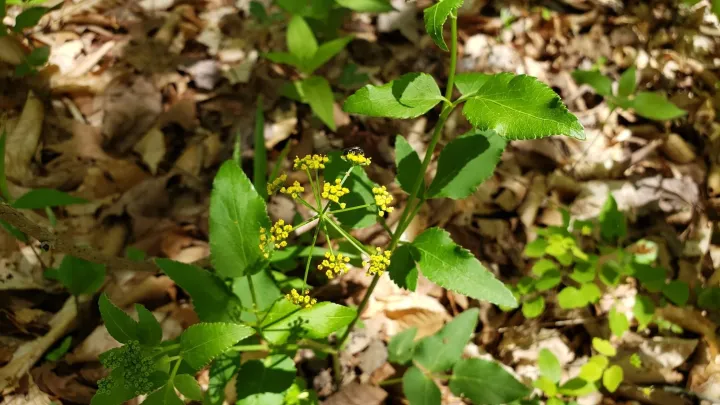
Thaspium trifoliatum, commonly known as meadow-parsnip, is a perennial flowering plant within the Apiaceae family. It is native to the woodlands and meadows of the eastern United States, where it thrives in temperate climates.
The plant features distinct trifoliate leaves and produces clusters of small, yellow flowers arranged in compound umbels. Its root system is fibrous, allowing it to anchor effectively in various soil types, ranging from moist loam to clay-based substrates.
Cultivation requires sites that provide partial shade or dappled sunlight, mimicking its native habitat. Proper soil moisture is critical; however, the soil must be well-drained to prevent root rot during the dormant season.
Regarding climate, the species is highly resilient to cold. It enters a period of dormancy during winter and initiates rapid growth as temperatures rise in the spring, making it well-adapted to USDA hardiness zones within its range.
In agricultural and landscaping contexts, meadow-parsnip is utilized for its ecological value. It acts as an important nectar source for native pollinators and fits well into biodiversity-focused planting schemes on farms.
Main diseases and pests
The primary diseases affecting Thaspium trifoliatum include powdery mildew and fungal leaf spots, which typically flourish in conditions with high humidity and poor air circulation.
Pests such as aphids and leaf-mining insects can pose a threat to the succulent foliage. Monitoring for early signs of infestation is necessary to prevent significant damage to the plant's photosynthetic capacity.
Root pathogens, particularly Pythium species, may occur if the soil remains waterlogged for extended periods. Establishing a proper drainage system is the most effective preventative measure.
Agricultural management involves regular weeding to reduce competition for nutrients and space, as weeds can act as vectors for various plant viruses.
Integrated pest management strategies are recommended, emphasizing the use of beneficial insects and healthy soil biological activity to maintain the robustness of the crop throughout its life cycle.