
Hairy joint-parsnip
Thaspium barbinode
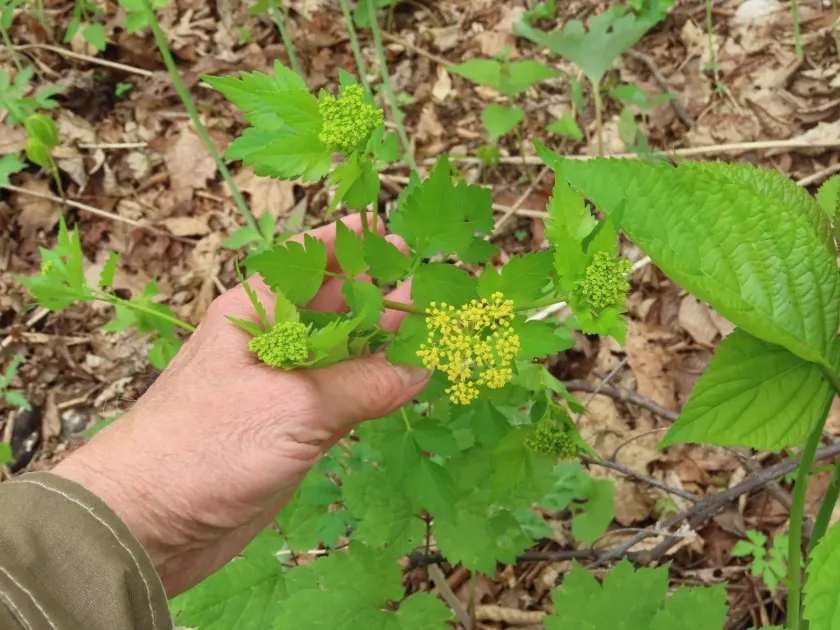
Description
Growing requirements
Hairy joint-parsnip (Thaspium barbinode) is a perennial herbaceous plant belonging to the Apiaceae family. It is native to North America, where it thrives in moist forests, woodland edges, and limestone-rich soils.
The plant is recognized by its distinct bearded nodes along the stems and its characteristic compound umbels. Its deep root system allows it to persist even in regions with fluctuating seasonal rainfall.
For cultivation purposes, Thaspium barbinode requires fertile, well-drained loamy soils. It maintains optimal health in sites that provide partial shade, as it is adapted to the light conditions of forest edges.
The species exhibits strong frost tolerance and can adapt to various microclimates, provided that the soil pH remains near neutral or slightly alkaline. It is an excellent candidate for ecological restoration projects.
Economically, it serves as a valuable nectar source for beneficial pollinators, which is an essential aspect of maintaining integrated pest management in nearby vegetable or grain fields.
Main diseases and pests
The primary threats to Thaspium barbinode are fungal pathogens, such as powdery mildew, which often develop in areas with poor airflow and high humidity.
Root rot is a significant risk factor if the plant is grown in compacted soils that prevent proper drainage, eventually leading to stunted development or plant loss.
Certain species of caterpillars and aphids are known to feed on the foliage and floral structures, causing mechanical damage that can decrease the overall vigor of the population.
Maintaining proper spacing between plants is crucial to ensure good ventilation, which is the most effective cultural method for preventing the onset of common fungal diseases.
Regular field scouting is highly recommended to monitor the presence of insects and the early symptoms of pathogens, allowing for timely and efficient management decisions.