
Thalassodendron ciliatum
Thalassodendron ciliatum
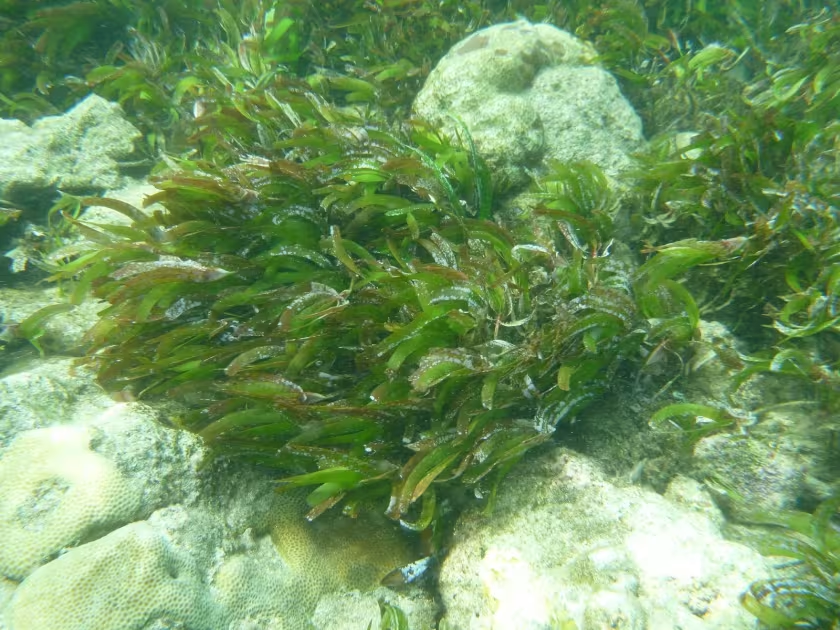
Description
Sowing dates
Thalassodendron ciliatum is a perennial marine seagrass and is not a traditional agricultural crop; it is a vital component of tropical marine ecosystems.
Reproduction in the wild relies on the release of viviparous seeds that attach to the substrate through specialized root-like anchors.
Ecological restoration efforts involve harvesting mature seeds or cuttings and planting them manually in sandy, shallow coastal zones.
The successful establishment of new colonies requires careful timing, coinciding with calm sea conditions to prevent displacement by strong currents.
Restoration sites are often protected with mesh structures until the seedlings develop sufficient root biomass to secure themselves in the sediment.
Growing requirements
This species belongs to the Zosteraceae family and requires clear, saline, and well-lit tropical waters to thrive at depths of 1 to 20 meters.
Thalassodendron ciliatum demands stable, sandy, or muddy substrates that provide enough structural support for its robust rhizomes.
Optimal growth occurs in water temperatures between 20 and 30 degrees Celsius, with high water transparency for effective photosynthesis.
It is sensitive to freshwater influxes, as it requires constant high salinity levels to maintain its physiological functions and leaf health.
The species depends on regular water movement to ensure oxygen and nutrient exchange while avoiding excessive siltation that could bury the plants.
Yield
The yield of Thalassodendron ciliatum is measured by its environmental service contribution, including oxygen production and carbon sequestration.
These seagrass meadows serve as critical habitats and nursery grounds for various commercially important fish and invertebrate species.
High-density meadows stabilize the seafloor, effectively reducing coastal erosion and mitigating the impact of wave energy on shorelines.
Biomass production supports a complex food web, acting as a foundation for biodiversity within the Indo-Pacific coastal regions.
While not harvested for mass food production, its ecological value is irreplaceable for sustaining ocean health and coastal productivity.
Main diseases and pests
Anthropogenic impacts, such as coastal development and agricultural runoff causing eutrophication, pose the most significant threats to the species.
Destructive fishing practices, including trawling and anchoring, cause irreversible damage to the fragile rhizome systems of the seagrass.
Rising sea temperatures and ocean acidification may disrupt reproductive cycles and increase susceptibility to pathogenic infections.
Competition from invasive algal species and shifts in sea-level patterns can lead to the displacement of native Thalassodendron populations.
Pollution from heavy metals and industrial waste can accumulate in the tissues, severely hindering the plant's growth and survival rates.
Harvesting
Large-scale commercial harvesting of Thalassodendron ciliatum is strictly avoided to preserve its role in ocean health and coastal protection.
Selective harvesting of reproductive shoots for research and restoration is carried out by professional divers to ensure minimal environmental impact.
Tools used during collection are designed to protect the integrity of the surrounding seafloor and avoid uprooting neighboring plants.
Transportation of plant material is conducted in climate-controlled tanks to mimic natural seawater conditions and ensure high viability upon arrival.
Post-transplantation monitoring is essential to track the growth success and adaptation of the restored seagrass patches to the local environment.