
Tetraselmis suecica
Tetraselmis suecica
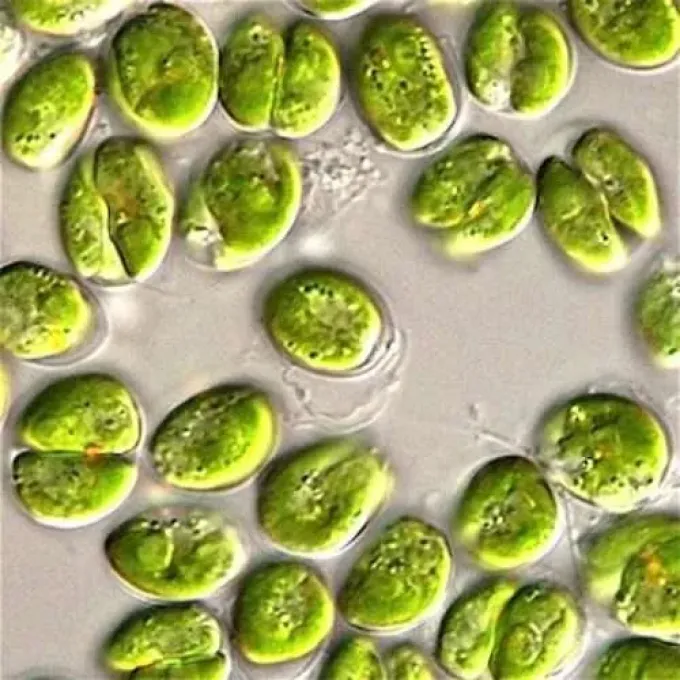
Description
Sowing dates
Tetraselmis suecica is a unicellular green microalga widely cultivated on an industrial scale in specialized photobioreactors or open ponds.
The "sowing" process, known as inoculation, starts with preparing pure cultures in controlled laboratory conditions where lighting and temperature are monitored.
The culture is gradually scaled up, transferred from small flasks to larger volumes and eventually into massive industrial-scale tanks.
A critical requirement is the use of sterile nutrient media, typically based on a modified F/2 medium enriched with nitrogen, phosphorus, and trace minerals.
The biomass doubling time under optimal conditions ranges from 12 to 24 hours, ensuring a continuous and efficient production cycle.
Growing requirements
This species belongs to the Chlorodendraceae family and possesses high plasticity, allowing it to adapt to various environmental conditions.
Active photosynthesis requires water temperatures between 18 and 24 degrees Celsius, which is optimal for rapid cell growth and division.
Irradiance levels should range from 100 to 300 micromoles of photons per square meter per second under continuous or long-day lighting.
Salinity levels can fluctuate, although the most favorable conditions for the culture are typically between 20 and 35 parts per thousand (ppt).
Constant agitation is necessary to prevent cell sedimentation and ensure adequate distribution of carbon dioxide throughout the growth medium.
Yield
Yield is measured by cell density per milliliter or by the dry weight of biomass produced per day within the cultivation system.
Using high-efficiency photobioreactors, it is possible to achieve a cell density exceeding 2–3 million cells per milliliter of culture.
Average productivity reaches up to 50–100 milligrams of dry biomass per liter of culture per production cycle.
Optimized light delivery and consistent CO2 supply can increase biomass yields by 30-40% compared to traditional extensive pond methods.
High lipid and protein content in the cells makes this species a premium raw material for processing into high-value feed additives.
Main diseases and pests
The primary biological risk is contamination by protozoans, such as ciliates or rotifers, which graze on the algal cells.
Bacterial contamination can lead to reduced growth rates and the accumulation of toxic metabolic byproducts in the nutrient solution.
Viral infections can cause massive cell lysis, potentially destroying the entire culture in a reactor within just a few hours.
Abrupt changes in light intensity or critical water overheating induce stress, which halts the cell division process immediately.
A deficiency in essential nutrients often leads to premature entry into the stationary growth phase, significantly reducing biomass quality.
Harvesting
Harvesting is typically carried out using centrifugation, allowing for rapid and effective separation of cells from the growth medium.
Alternative methods include flocculation using specific reagents, which is more cost-effective for large-scale operations.
Once harvested, the biomass can be used in its fresh state or dried to create concentrated nutritional powders for various applications.
The product is widely used as a primary live feed for the larvae of mollusks, shrimp, and marine fish in aquaculture facilities.
Due to its well-balanced amino acid profile and high fatty acid content, Tetraselmis is considered a gold-standard feed in marine aquaculture.