
Tetraselmis chui
Tetraselmis chui
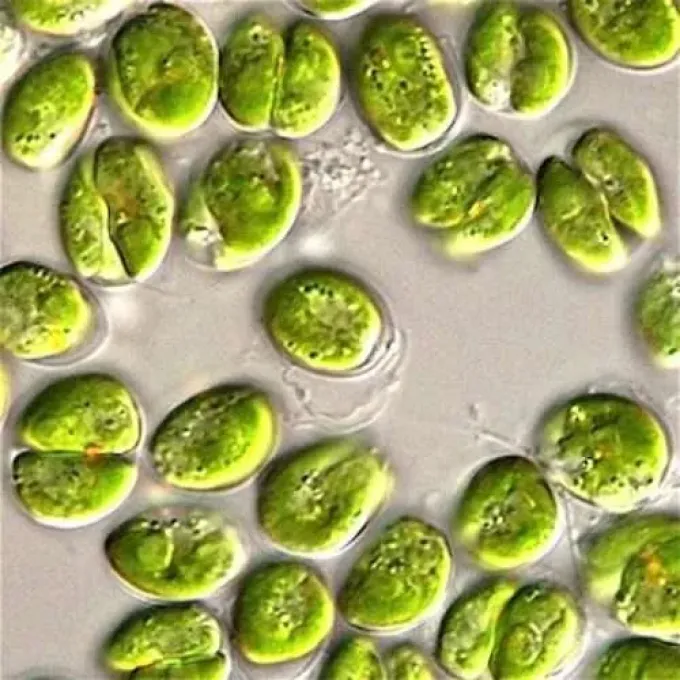
Description
Sowing dates
Tetraselmis chui is a unicellular green microalga belonging to the division Chlorophyta and the family Chlorodendraceae. The cultivation process starts with the preparation of a starter culture in strictly sterile laboratory conditions.
Growth media enriched with nitrogen, phosphorus, and trace elements, typically following the F/2 Guillard formula, are used for multiplication. Maintaining culture purity at the beginning is a critical factor to prevent contamination by unwanted species.
Inoculation is performed while maintaining a temperature range of 20 to 25 degrees Celsius. It is important to provide constant lighting or a 12/12 light cycle to support active photosynthesis throughout the growth phase.
Scaling up the culture is done in stages: from small flasks to large photobioreactors or open ponds. Constant agitation of the suspension is required to distribute nutrients evenly and prevent cells from settling at the bottom.
The initial seeding density when transferring to larger tanks is usually between 0.5 and 1 million cells per milliliter. Timely transfer into fresh medium allows the culture to remain in the active growth phase and avoids premature decline.
##requirements##This microalgae species is euryhaline, meaning it can survive in a wide range of water salinity, from 10 to 40 ppt. This trait makes Tetraselmis chui a versatile candidate for various aquaculture conditions.
The optimal temperature range for cellular metabolism is between 20 and 28 degrees Celsius. Exceeding 30 degrees can cause significant stress and mass mortality, necessitating active cooling systems for large volumes.
Light intensity plays a vital role in the rate of cell division. It must be sufficient to prevent light starvation but moderate enough to avoid photoinhibition, especially when the culture reaches high densities.
The pH level of the medium should be kept within the range of 7.5 to 8.5. To stabilize this parameter, carbon dioxide injection is often used, which also provides the necessary carbon source for biomass synthesis.
In addition to macronutrients, the presence of group B vitamins, particularly B12, biotin, and thiamine, is crucial. A lack of these components in the medium significantly slows development and reduces lipid accumulation.
##yield##The yield of Tetraselmis chui is measured by the amount of biomass produced per unit volume. In intensive cultivation systems, densities can reach 3 to 5 million cells per milliliter.
To increase biomass output, continuous cultivation methods are applied, where a portion of the suspension is replaced with fresh medium periodically. This approach keeps the culture in the log growth phase for extended periods.
The quality of the harvest depends on the content of fatty acids, proteins, and pigments. Optimizing light and nutrient regimes can enhance the concentration of Omega-3 fatty acids, which are highly valued in the feed industry.
Yield monitoring is conducted via direct cell counts using a hemocytometer or through fluorometric methods. Dry biomass weight is also an essential indicator that correlates with overall system productivity.
To maximize harvest efficiency, it is important to select the right moment to terminate the growth cycle, when density peaks, but cells remain healthy and have not yet begun to degrade due to nutrient depletion.
##threats##The main threat to the culture is contamination by protozoa, specifically ciliates, which actively consume the microalgae. Effective management involves rigorous water filtration and sterilization of all media components.
Bacterial infections can lead to a sudden drop in pH and total culture collapse. Using antibiotics is generally avoided in large-scale production; therefore, emphasis is placed on biological control and strict equipment hygiene.
Viral diseases can cause cell lysis, often resulting in a rapid bleaching of the suspension color. Prevention relies on maintaining pure starting inocula and regularly refreshing the culture stock.
Inappropriate lighting regimes can cause the development of abnormal cell forms that lose their ability to divide. Regular microscopic monitoring allows for the early detection and correction of these issues.
Chemical contamination from heavy metals or residues of cleaning agents is lethal to the algae. Water must be thoroughly treated, utilizing processes such as reverse osmosis or UV irradiation before use.
##harvest##Harvesting is typically carried out by centrifugation, which concentrates the cells into a dense paste. This method is the most effective for maintaining cellular integrity and preventing damage.
An alternative method is flocculation, where specific reagents are added to cause cells to aggregate and settle. This method is more cost-effective but requires quality control to ensure no residues remain in the final product.
After harvesting, the biomass can be used in fresh, frozen, or lyophilized form. Freezing allows for the preservation of cell viability, which is important for long-term use in hatcheries.
Tetraselmis chui is widely used as an essential starter feed for the larvae of fish, shrimp, and mollusks due to its appropriate size and high nutritional content, increasing survival rates significantly.
In biotechnology, this culture is also used for extracting valuable compounds such as carotenoids and chlorophyll. The extraction process requires careful disruption of the cell walls to achieve maximum yields of target substances.