
Tetraneuris acaulis
Tetraneuris acaulis
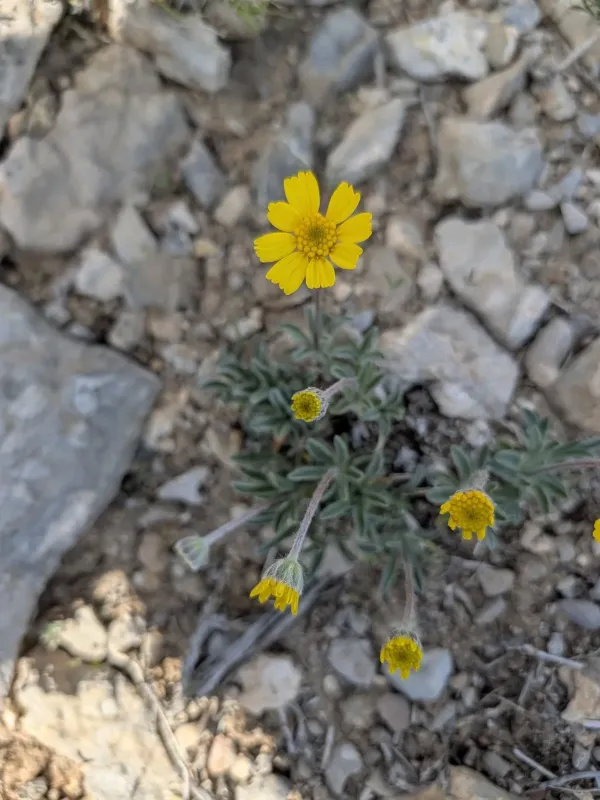
Description
Growing requirements
Tetraneuris acaulis, commonly known as the stemless four-nerve daisy, belongs to the Asteraceae family. It is native to the central and western regions of North America, where it thrives in open, stony grasslands and rocky outcrops.
The plant features a basal rosette of narrow, silvery-green leaves. Its most distinctive characteristic is the presence of bright, cheerful yellow flowers held on very short stalks that rise just above the foliage, appearing from late spring through summer.
This species is highly adapted to extreme environmental conditions, including intense solar radiation and recurring periods of drought. It is a quintessential xeriscape plant that requires minimal supplemental water once it has established its root system.
The primary cultivation requirement is excellent soil drainage. It performs best in poor, rocky, or gravelly soils with a pH ranging from neutral to slightly alkaline. It cannot tolerate heavy clay soils that retain moisture during winter dormancy.
Tetraneuris acaulis is primarily utilized as a decorative element in alpine gardens and rockeries. Its compact growth habit and natural resistance to harsh elements make it a preferred choice for sustainable gardening and low-maintenance borders.
Main diseases and pests
The most significant threat to this species is root rot caused by poor soil drainage and excessive humidity. Gardeners should ensure that the growing medium consists of at least 30-50% inorganic material like sand, gravel, or grit to facilitate rapid water drainage.
While generally robust, the plant can be susceptible to aphids that gather on the flower buds. Regular observation is recommended, and if an infestation is detected, simple horticultural soaps or biological control agents can effectively manage the issue without damaging the plant.