
Tetranema roseum
Tetranema roseum (M. Martens & Galeotti) Standl. & Steyerm.
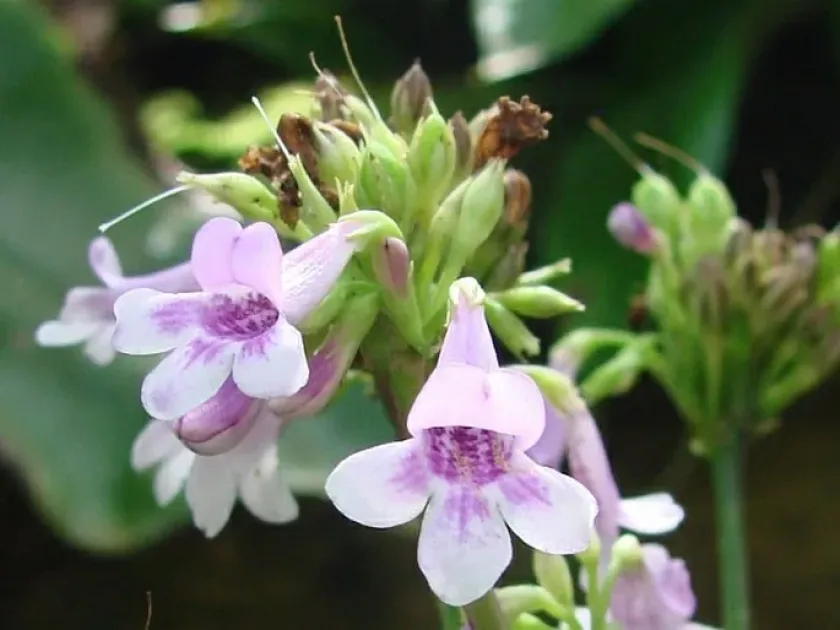
Description
Sowing dates
Tetranema roseum is propagated primarily through seeds or stem cuttings. Sowing should be performed in late winter or early spring using a sterile, well-draining seed-starting mix.
The seeds are exceptionally small and require surface sowing. They should be pressed gently into the moist substrate without being covered, as they need light to germinate.
A stable temperature of approximately 20–22 degrees Celsius is required for successful germination. Keeping the seed tray under a plastic cover helps maintain the necessary humidity.
Seedlings should be pricked out into individual containers once they have developed at least two true leaves, ensuring the soil remains light and airy.
Vegetative propagation via stem cuttings is also effective. Cuttings root readily in water or damp perlite, providing a faster way to achieve a flowering, mature plant.
Growing requirements
Tetranema roseum is a member of the Scrophulariaceae family, native to the humid tropical forests of Mexico and Central America, where it thrives in shaded environments.
This species requires bright, indirect light. Direct sunlight can scorch the foliage and reduce the plant's overall health, so it is best kept in a partial shade position.
The ideal temperature range for growth is between 18 and 24 degrees Celsius. It is sensitive to cold drafts and should be protected from sudden changes in ambient temperature.
The potting medium must be fertile, humus-rich, and slightly acidic. Good drainage is crucial to prevent the roots from sitting in water, which the plant does not tolerate well.
Watering should be consistent; the top layer of the soil should be allowed to dry slightly between waterings, while the plant benefits from regular misting for higher humidity.
Main diseases and pests
Root rot is the most common health issue for Tetranema roseum, usually caused by overwatering or poor drainage in the potting container, leading to fungal colonization.
Spider mites are a persistent threat, especially in indoor environments with low humidity, where they colonize the underside of leaves and damage the tissue.
Aphids and mealybugs can also infest the plant, causing stunted growth and leaf deformation, which necessitates timely intervention with appropriate insecticides.
Powdery mildew may develop if the plant is kept in an area with stagnant air and high humidity, appearing as a white powdery coating on the surface of the leaves.
- Monitor leaf undersides for early signs of pests.
- Ensure adequate air circulation around the plants.
- Maintain balanced soil moisture to discourage pathogens.