
Testulea gabonensis
Testulea gabonensis
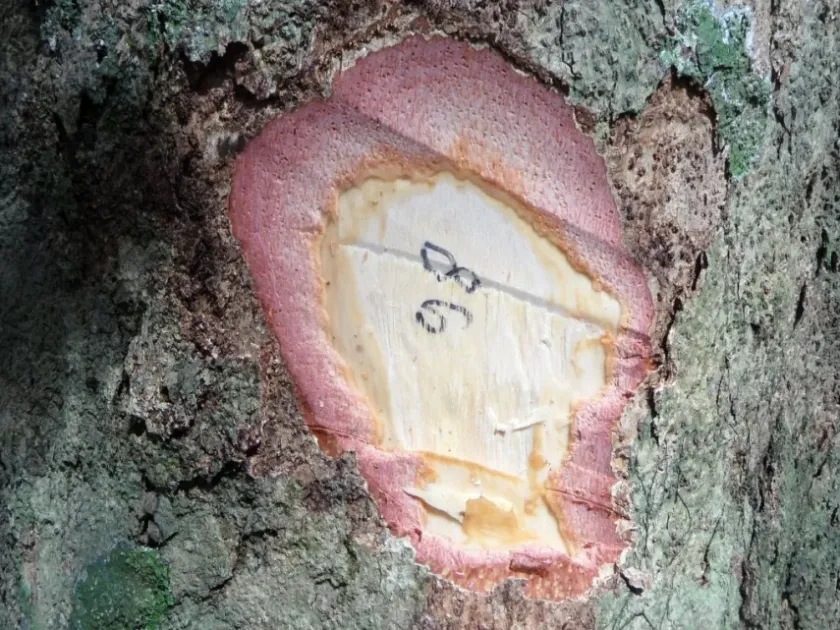
Description
Growing requirements
Testulea gabonensis is a prominent tropical tree species belonging to the Ochnaceae family. It is native to the primary tropical rainforests of Central Africa, with its natural range centered in Gabon and Cameroon.
The species requires a humid, equatorial climate with high annual rainfall to thrive. It performs best in deep, fertile soils that provide sufficient drainage while maintaining high moisture levels throughout the growing season.
Botanically, this tree is characterized by a significant height and high-quality timber properties. It typically occupies the upper canopy of the forest, adapting to competitive light conditions during its long growth cycle.
Growth rates for this species are inherently slow, which is a key consideration for foresters and conservationists. Natural regeneration depends on the integrity of the forest floor and the presence of micro-environments protected by the canopy.
The wood, traded under the name "Izombe," is highly valued for its physical strength, durability, and rich coloration. It is primarily used for high-end cabinetry, flooring, and decorative veneer construction.
Main diseases and pests
The primary threat to Testulea gabonensis populations is industrial logging, which often outpaces the tree's natural ability to reproduce in the wild.
Various stem borers and fungal pathogens pose risks, particularly when individual trees are stressed by environmental shifts or local ecological disturbances.
Deforestation driven by agricultural land conversion significantly limits the genetic pool, impacting the long-term viability of the species in its native range.
Limited research into silvicultural practices for this specific species leaves a gap in our knowledge regarding large-scale disease management in plantations.
Conservation strategies currently prioritize legal harvesting quotas and the establishment of strict forest reserves to maintain the ecological balance necessary for the tree's survival.