
Ternstroemia gymnanthera
Ternstroemia gymnanthera (Wight & Arn.) Bedd.
Description
Growing requirements
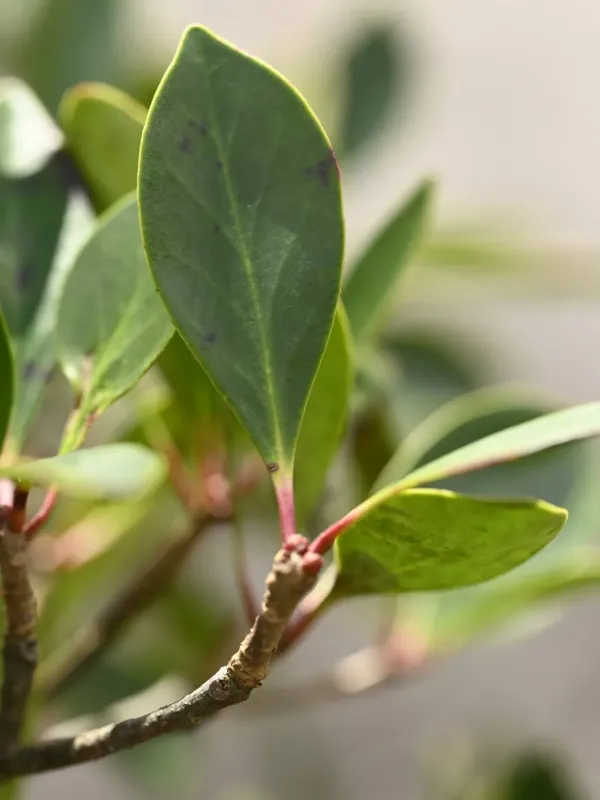
Ternstroemia gymnanthera is an evergreen shrub or small tree belonging to the Pentaphylacaceae family. It is highly regarded in horticulture for its dense, glossy foliage and elegant growth habit. The plant typically reaches heights of 3 to 5 meters, maintaining a compact structure that makes it an excellent choice for structural garden designs.
Originating from East and Southeast Asia, this species thrives in subtropical environments. It prefers regions with stable, mild temperatures and high humidity. While it is hardy in temperate zones, extreme freezing temperatures can cause significant damage to young shoots, necessitating winter protection in colder regions.
Successful cultivation of Ternstroemia gymnanthera requires acidic, well-drained soil rich in organic matter. The plant is notoriously sensitive to alkaline conditions, which often cause iron chlorosis, leading to yellowing of the leaves. Sites with filtered light or partial shade are optimal, although the plant can tolerate full sun if soil moisture is consistently maintained.
Agrotechnical practices for this species focus on precise irrigation and periodic pruning to maintain shape. Because it responds well to trimming, it is widely utilized for hedges, topiaries, and formal garden displays. Fertilizer applications should be focused on the early spring, using acid-loving plant formulations to promote healthy, dark green foliage growth.
In ornamental landscaping, this shrub is valued for its versatility as a foundation plant, a specimen, or a container plant. Its slow growth rate makes it a favorite for bonsai enthusiasts as well. It provides year-round visual interest and serves as an effective screen due to its dense branching pattern.
Main diseases and pests
The plant is susceptible to common scale insects and mealybugs, which can cluster on the stems and leaf undersides, extracting sap and weakening the plant. Regular monitoring and the application of horticultural oils during the growing season are effective methods to manage these pest populations and maintain plant health.
Root pathogens and leaf spot diseases are the primary concerns when soil drainage is inadequate. Overwatering creates favorable conditions for fungal growth, leading to crown rot and leaf blight. Implementing a strict irrigation schedule and ensuring the planting medium is porous are key preventative measures against these threats.