
Tephrosia ehrenbergiana
Tephrosia ehrenbergiana
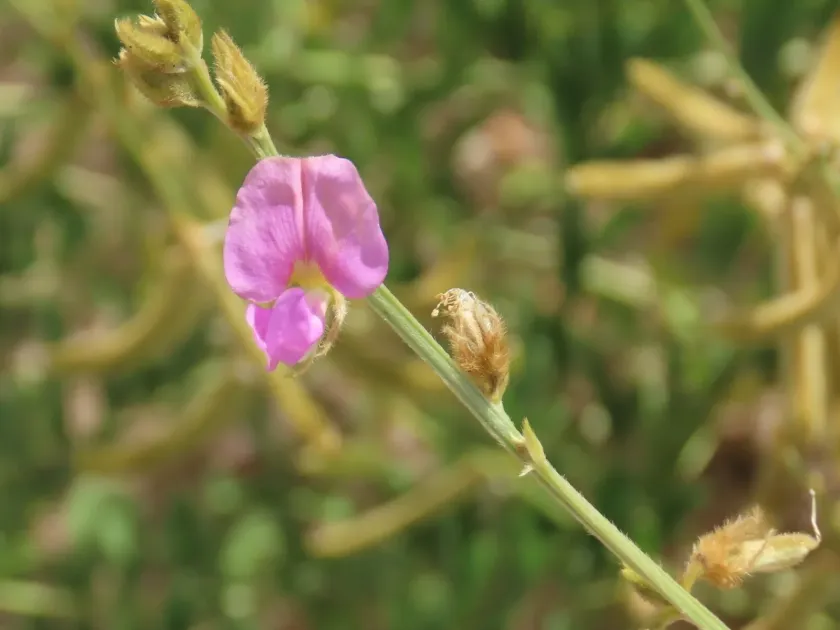
Description
Sowing dates
Tephrosia ehrenbergiana is a perennial shrub, and its planting schedule is strictly dictated by the onset of the wet season in its native habitat. Seeds should be sown when the soil has gained sufficient moisture and heat to support early germination.
Seed scarification is highly recommended prior to planting to break the physical dormancy of the seed coat, thereby significantly increasing emergence uniformity. The seeds are typically planted at a depth of 2 to 4 centimeters in well-prepared seedbeds.
Planting density varies according to the intended use of the crop. For green manure production, a higher density is employed to maximize biomass, while seed multiplication blocks require wider row spacing to ensure proper aeration and light penetration.
As the seedlings show a relatively slow initial growth rate, it is crucial to keep the plots free from weeds during the first weeks. This allows the plant to establish its deep root system without competition for nutrients.
Direct seeding methods, where seeds are placed in moisture-retaining pits, are often used in semi-arid areas to ensure successful establishment during the first critical weeks of development.
Growing requirements
Belonging to the Fabaceae family, Tephrosia ehrenbergiana is prized for its exceptional drought tolerance and its ability to thrive in nutrient-poor, sandy soils. It is widely considered an excellent candidate for land restoration projects.
The plant performs best in well-drained soils and is susceptible to root rot if subjected to waterlogging. It is well-adapted to neutral or slightly acidic soil environments, demonstrating robust growth where other crops struggle.
This species is highly photophilic, meaning it requires full exposure to sunlight for optimal development. It thrives in tropical and arid temperature regimes, with ideal growth occurring between 20 and 35 degrees Celsius.
While the plant is capable of atmospheric nitrogen fixation, a small initial dose of phosphorus can significantly improve root system development and nodulation, which is vital for the plant's long-term survival in harsh conditions.
The deep taproot of the plant is its most significant feature, allowing it to improve soil structure and access moisture from deeper profiles, effectively making the environment more hospitable for subsequent crops in a rotation.
Yield
The biomass yield of Tephrosia ehrenbergiana is largely dependent on the total rainfall received during the growing season. In optimal conditions, it produces a significant amount of green material that serves as high-quality organic matter.
When used as a green manure, the crop is typically incorporated into the soil just before full flowering, when the nitrogen content in the tissues is highest. This practice dramatically enhances the fertility of degraded soils.
Seed production yields are variable and highly dependent on the length of the dry period following the rainy season. Harvesting occurs once the pods change color and begin to dry naturally on the shrub.
The crop acts as a reliable insurance resource in marginal lands. Even during periods of stress, the plant maintains a base level of productivity, ensuring that soil coverage and nitrogen cycling are not entirely lost.
The residue remaining after harvest contributes significantly to long-term soil health, as the nitrogen accumulated in the root nodules is released gradually, providing a sustainable nutrient source for future agricultural plantings.
Main diseases and pests
The primary threats to Tephrosia ehrenbergiana are fungal pathogens, specifically those causing root rot, which are triggered by poor soil drainage and water stagnation. Maintaining proper soil moisture levels is the best defense.
Pests such as aphids and leaf-eating beetles can cause damage to the foliage during the vegetative stage. Regular crop scouting is necessary to determine if intervention with biological or chemical control measures is required.
Seed-boring insects present a specific challenge for those growing the crop for seed multiplication purposes. Integrated pest management strategies are often necessary to protect the yield from these pests.
Weed competition is a critical concern, especially during the seedling stage. If weeds are not managed, they can quickly overgrow the young shrubs and impede their development due to light and nutrient limitation.
During the flowering stage, the plants must be monitored for any viral symptoms spread by insect vectors. Maintaining healthy soil and balanced nutrition can bolster the plant's natural resistance to various diseases.