
Tavaresia barklyi
Tavaresia barklyi
Description
Growing requirements
Tavaresia barklyi is a unique succulent species belonging to the Apocynaceae family. Originally native to the arid regions of Southern Africa, this plant has evolved specialized morphological adaptations to survive in harsh, low-rainfall environments, making it a distinctive subject for succulent enthusiasts.
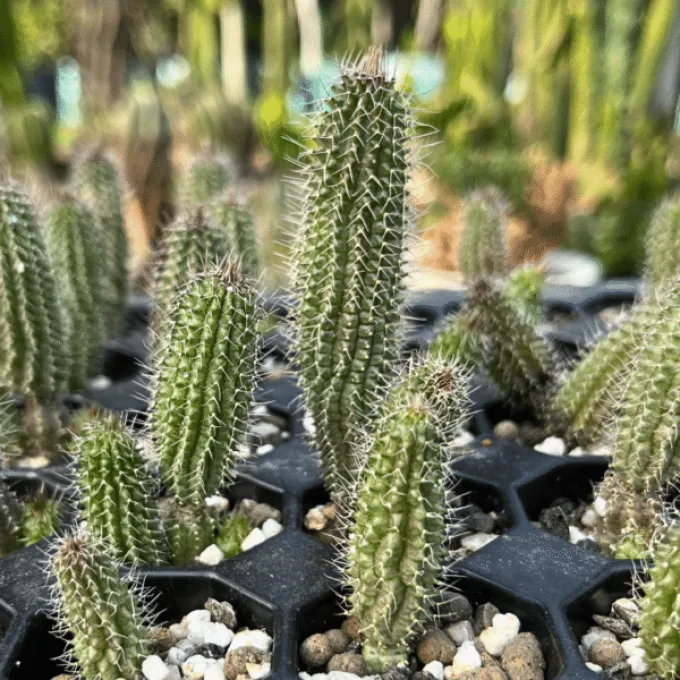
The plant features distinctively segmented, succulent stems arranged in clusters, adorned with tubercles that terminate in small, hair-like spines. The most striking biological characteristic is its large, trumpet-shaped flowers, which often display intricate, spotted patterns designed to attract specific desert pollinators.
Optimal growth requires bright, filtered sunlight to maintain the integrity of the stem structure and prevent etiolation. In an indoor setting, maintaining a stable temperature range between +20°C and +26°C during the active growing season is essential for the health of the species.
The substrate must be highly porous and inorganic. A professional mix for this culture usually consists of sandy loam mixed with perlite, pumice, or gravel to ensure rapid water drainage. The container must have sufficient drainage holes to prevent the accumulation of moisture at the base of the stems.
Cultural management emphasizes the "dry-rest" cycle. During the winter period, the plant enters a dormant phase where watering should be almost completely withheld. This mimics the natural seasonal drought of its native habitat and is necessary to trigger the flowering mechanism in the subsequent season.
Main diseases and pests
The primary pests affecting this crop include the mealybug, which tends to settle in the grooves between the tubercles, and the two-spotted spider mite. Effective management involves the use of targeted systemic insecticides and maintaining proper humidity levels to deter mite colonization.
Pathogenic threats are dominated by fungal infections such as stem rot and root decay, typically caused by overwatering or poor drainage. To mitigate these risks, it is recommended to monitor the stem firmness regularly and ensure that the root zone is allowed to dry out entirely before applying additional water.