
Mountain pepper
Tasmannia lanceolata
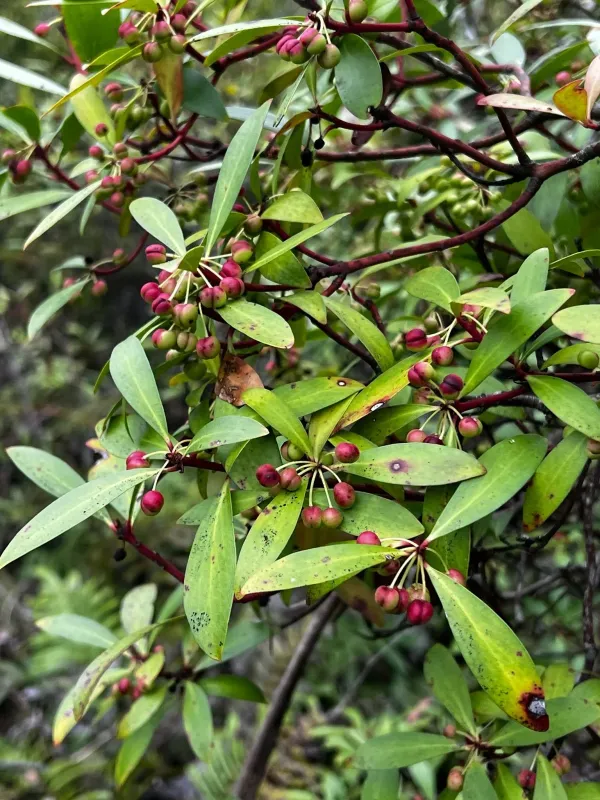
Description
Sowing dates
Propagation of Tasmannia lanceolata is typically achieved through seeds or stem cuttings. Seeds require a period of cold stratification for several weeks to break dormancy, mimicking the conditions of their native alpine habitats.
When sowing, use a light, well-draining potting mix. Since the seeds require light to germinate, they should be sown on the surface and pressed lightly. Consistent moisture must be maintained, but be careful to avoid waterlogging the soil.
Cuttings are often preferred for commercial production to ensure plant uniformity. Semi-hardwood cuttings taken during the summer months and treated with rooting hormones show the best success rates under high-humidity conditions.
Once the young plants are robust enough, they are transplanted into the field during early spring. Providing a sheltered environment during the initial growth phase helps the plants establish a strong root system before facing harsher conditions.
Spacing requirements vary depending on the plantation scale, but generally, a distance of 2 meters between plants is recommended to promote airflow and prevent the development of fungal infections in the dense canopy.
Growing requirements
Tasmannia lanceolata is an evergreen shrub belonging to the Winteraceae family. It is native to the cool, temperate rainforests of Tasmania and southeastern Australia, where it thrives in moist environments.
The soil should be slightly acidic, rich in organic matter, and possess excellent drainage properties. While the plant loves moisture, it is highly sensitive to "wet feet," which can cause root rot very quickly.
The ideal temperature for cultivation ranges from 10 to 22 degrees Celsius. Extreme heat or direct, intense sunlight can scorch the leaves, so plantations in hotter areas may require protective shade netting to maintain plant health.
Regular irrigation is essential, especially during the dry season. Implementing a drip irrigation system helps maintain a constant level of soil moisture while reducing the risk of wetting the foliage, which could lead to disease.
Organic fertilizers applied at the start of the growing season provide the necessary nutrients for leaf development. Excessive nitrogen should be avoided as it may diminish the intensity of the volatile oils that define the spice's unique flavor.
Yield
The economic value of this crop is derived from both its leaves and its small, dark berries. It typically takes about 3 to 5 years for a new plantation to reach a commercially viable stage for harvesting.
Harvesting leaves can be done selectively throughout the growing season. Pruning the plant not only provides a product for the market but also encourages the shrub to grow bushier, which improves overall biomass for future harvests.
The berries are harvested once they reach their full maturity and turn deep purple or black. As they are quite fragile, careful handling is required to ensure that the final product reaches the market in prime condition.
The yield of essential oils and dried matter is highly dependent on the plant's environment. Mature shrubs generally produce higher concentrations of bioactive compounds, such as polygodial, which provides the characteristic spicy heat.
Successful management of the plantation involves balancing the harvest intensity with the plant's health. Over-harvesting can weaken the shrub, so sustainable practices are necessary to maintain long-term productivity.
Main diseases and pests
The Mountain pepper shrub is naturally resilient to many pests due to the high concentration of antiseptic compounds in its tissues. However, improper management can lead to vulnerabilities in the crop.
Root rot, specifically caused by Phytophthora species, is the most significant threat to plantations. Ensuring that the soil remains well-drained is the single most important preventative measure against this pathogen.
In greenhouse settings or areas with poor ventilation, spider mites can become an issue. They thrive in dry, stagnant air, so maintaining proper airflow and humidity levels is an effective way to suppress their populations.
Aphids may occasionally target the new, soft growth of the plant during the spring. In these cases, biological control methods, such as encouraging natural predators, are preferred over chemical pesticides to keep the harvest organic.
Monitoring the plants regularly for signs of distress—such as leaf yellowing or stunted growth—allows for early intervention. Keeping the area free of excess debris also helps in preventing the buildup of fungal spores.
Harvesting
Harvesting must be performed with great care to avoid bruising the plant tissue. For berries, hand-picking is currently the most effective method to ensure the quality of the fruits for high-end culinary markets.
Post-harvest processing is critical to the quality of the final spice. Drying must take place at low temperatures in the shade to prevent the evaporation of the delicate essential oils that give the product its aroma.
Once dried, the berries and leaves are either packaged whole or processed into powders. The products should be kept in airtight, opaque containers to protect them from light, moisture, and heat degradation.
Shelf-life is excellent if stored correctly, with the spice retaining its pungent, berry-like flavor profile for up to two years. Consistent storage conditions are the key to maintaining market value.
- Hand-picking berries
- Pruning branches with leaves
- Sorting by maturity and size
- Controlled shade drying
- Vacuum-sealed packaging