
Yellow pimpernel
Taenidia integerrima
Description
Sowing dates
The propagation of Yellow pimpernel is most successful via seeds. Because the seeds exhibit dormancy, they must undergo a cold-moist stratification period of 30 to 60 days at approximately 4°C to ensure uniform germination.
Sowing should ideally occur in late autumn, allowing the seeds to undergo natural winter stratification in the ground. If sowing in the spring, the use of previously stratified seeds is highly recommended to improve the germination rate.
Seeds should be sown shallowly, ideally covered by no more than 1 cm of light soil or grit. Spacing requirements include allowing at least 30 cm between individual plants to promote air circulation and reduce the risk of foliage diseases.
Initial growth during the first season is primarily focused on root development, meaning the plants will appear relatively small. Consistent weeding is essential during this establishment phase to prevent competition from more aggressive weeds.
Once the root system is established, the plant requires minimal maintenance. Avoid waterlogged soils, as this species is prone to root rot in poor drainage conditions; therefore, sandy or rocky soil mixes are ideal for long-term cultivation.
Growing requirements
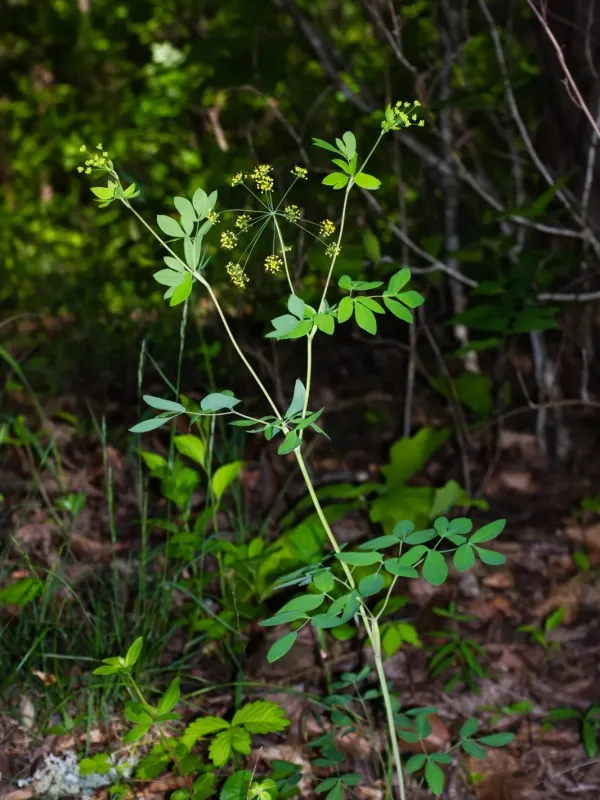
Yellow pimpernel (Taenidia integerrima) is a perennial herbaceous plant belonging to the Apiaceae family. Native to North America, it is naturally found in dry prairies, rocky woods, and open slopes, demonstrating high ecological plasticity.
The plant features smooth, glaucous stems that typically reach heights of 30 to 90 cm. Its foliage is composed of twice or thrice pinnately compound leaves with entire, lanceolate leaflets, which distinguishes it from many other members of the carrot family that often have serrated leaves.
In terms of environmental conditions, Taenidia integerrima thrives in well-drained soils with a neutral or slightly alkaline pH. It is highly drought-tolerant once established, owing to its deep taproot system, and prefers full sun to light shade exposure.
Botanically, it produces compound umbels of yellow flowers that appear in late spring. These flowers are highly attractive to various pollinators, including bees and beneficial flies, which makes the plant a valuable addition to pollinator-friendly gardens.
In modern horticulture, this species is primarily valued for its airy texture and hardiness. It is frequently incorporated into native plant landscaping, prairie restoration projects, and perennial borders where low-maintenance plants are required.