
Medusahead
Taeniatherum caput-medusae (L.) Nevski
Description
Growing requirements
Medusahead (Taeniatherum caput-medusae) is a winter annual grass belonging to the Poaceae family. It is widely recognized as a highly invasive weed that can significantly reduce the productivity of rangelands and agricultural lands.
The plant thrives in Mediterranean-type climates, characterized by wet winters and dry summers. It is exceptionally well-adapted to environments where soil moisture becomes limited early in the growing season.
In terms of soil requirements, medusahead is not particular. It successfully colonizes various soil types, including heavy clays and rocky substrates, often outcompeting native perennial bunchgrasses that provide higher forage value.
The growth cycle of this species starts in the autumn with germination, followed by a period of slow winter growth, and rapid development in the spring. This phenology gives it a significant advantage in water uptake over many other plant species.
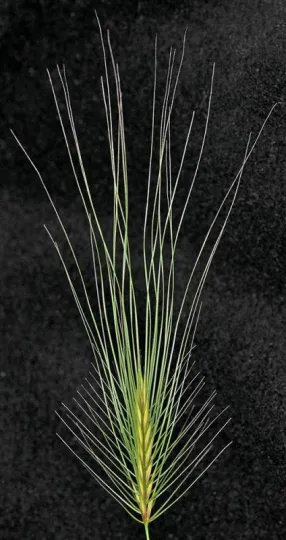
Morphologically, medusahead is easily identified by its long, twisted, and barbed awns, which resemble the head of the mythical Medusa, hence its common name. These structures are crucial for seed dispersal and protection.
Main diseases and pests
Medusahead poses a severe threat to livestock production by creating dense, impenetrable mats that displace desirable forage grasses. Its high silica content makes it unpalatable and potentially harmful to animals due to the barbed awns.
In crop production, medusahead acts as a vigorous competitor for resources. Its ability to extract soil moisture rapidly can lead to substantial yield losses in cereal crops if left unmanaged during the early growth stages.
Fire management is often discussed as a control strategy, as medusahead produces heavy amounts of dry, fine fuel that increases the risk and frequency of wildfires in invaded areas, further damaging the ecosystem.
Chemical control using selective herbicides is a standard practice in agricultural settings. However, management must be timed correctly, targeting the weed before it sets viable seeds to prevent further spread in the seed bank.
Integrated weed management, combining mechanical tillage, grazing strategies, and the introduction of competitive native species, remains the most sustainable approach for long-term control of this invasive grass.