
Tadehagi pseudotriquetrum
Tadehagi pseudotriquetrum
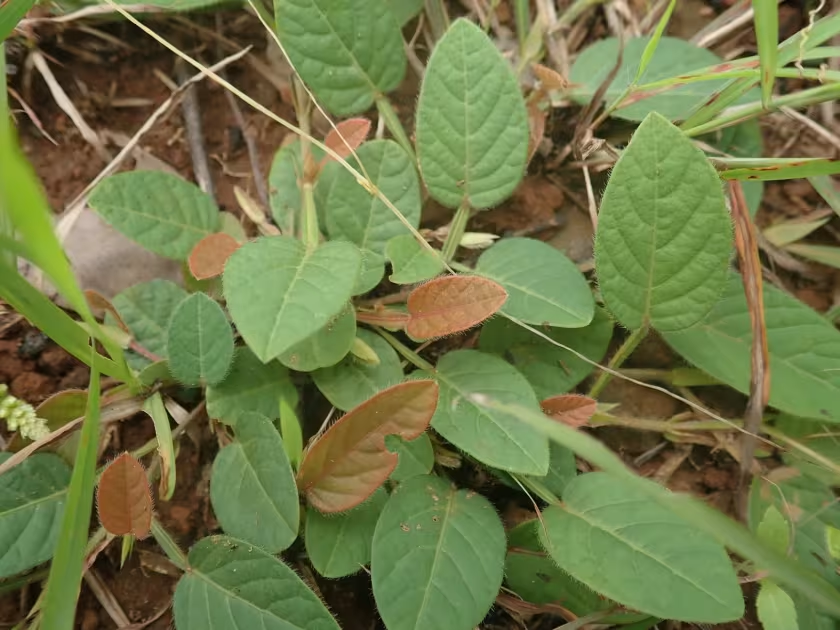
Description
Growing requirements
Tadehagi pseudotriquetrum is a perennial legume species originating from tropical regions of Asia, primarily valued for its role in fodder production and soil management. It belongs to the Fabaceae family, which is known for its nitrogen-fixing capabilities.
The plant thrives in warm climates, requiring temperatures between 20°C and 32°C for optimal growth. It is highly adaptable to various soil textures, ranging from sandy loams to heavier clays, provided that the soil drainage is sufficient to prevent root rot.
Regarding soil fertility, it performs well even on nutrient-poor sites, largely due to its symbiotic relationship with rhizobia. This biological trait allows it to thrive without heavy nitrogen fertilization, making it a sustainable choice for smallholder farmers.
Morphologically, it displays distinct trifoliate leaves and a shrubby habit, which helps in weed suppression when grown in dense stands. The plant's root structure is robust, helping to stabilize soil surfaces and enhance water infiltration in the field.
The primary agricultural use of Tadehagi pseudotriquetrum is as a high-quality forage crop for cattle and goats, as it provides a good balance of protein and fibers. It is also utilized as a green manure to enrich soil organic matter in integrated farming systems.