
Japanese pagoda tree
Styphnolobium japonicum
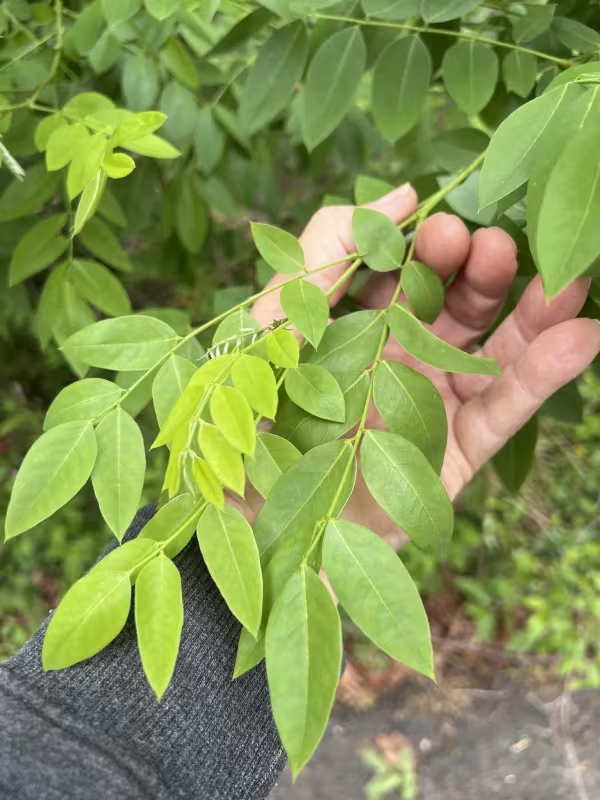
Description
Sowing dates
The seeds of the Japanese pagoda tree have a hard coat, so they require scarification or soaking in hot water for several hours to improve germination. Sowing is carried out in the spring when the soil temperature reaches 10-12 degrees Celsius to ensure uniform sprouting.
In nurseries, stratified seeds are sown at a depth of 3-4 centimeters in light, fertile substrate. The optimal planting pattern should account for the rapid development of the root system of seedlings in the early years of life.
When propagating by seeds, it is important to maintain stable soil moisture during the germination period while avoiding waterlogging. The first shoots typically appear 2-3 weeks after sowing, provided that temperature conditions are met.
Vegetative propagation using root cuttings or green cuttings is also possible, but the seed method remains the primary way to obtain a large quantity of planting material for industrial purposes.
Seedlings are planted in their permanent location at the age of 2-3 years. By this time, the plant has a well-developed taproot, which allows it to successfully adapt to new environmental conditions.
Growing requirements
The Japanese pagoda tree is a deciduous tree of the Fabaceae family, distinguished by high drought resistance and the ability to tolerate saline soils. It is a light-loving crop, so it should be planted in open, sunny areas.
The tree is not demanding regarding soil conditions; however, it shows the best growth indicators on deep, well-drained loams and chernozems with a neutral soil reaction. The plant does not tolerate water stagnation, which leads to rotting of the root collar.
In its youth, the crop needs protection from strong winds and harsh winter temperatures. Mature trees have sufficient frost resistance for most temperate regions, withstanding short-term frosts down to -25 degrees Celsius.
The crop is an excellent honey plant that requires a warm and long summer for full maturation of the shoots. In northern areas, the cultivation of this tree may be limited due to the risk of wood freezing during the winter.
An important requirement of agricultural technology is keeping the trunk circle free of weeds, especially in the early years of the plant's life, which ensures rapid growth and the absence of competition for nutrients.
Yield
The main commercial products of the Japanese pagoda tree are the unopened flower buds and mature pods (beans). The yield of buds depends on the age of the tree, lighting conditions, and the general level of agricultural care in the plantation.
The maximum accumulation of flavonoids, such as rutin, occurs during the budding phase, which determines the critical timing for harvest operations. Commercial raw material collection begins from trees that have reached 10-12 years of age.
The pods ripen in October and November. Harvesting the beans can continue until the onset of persistent frosts, as they store well on the branches without losing biological value.
The productivity of a mature tree, with proper crown formation, can reach several dozen kilograms of dry medicinal raw material per season. Stable yield is ensured by regular pruning, which promotes tree rejuvenation.
To preserve the quality of the raw material after collection, it must be subjected to rapid drying in well-ventilated rooms or specialized dryers at a temperature not exceeding 40-50 degrees Celsius.
Main diseases and pests
The Japanese pagoda tree has good immunity, but it can be affected by fungal diseases under unfavorable weather conditions or improper care. The most dangerous is leaf spot, which develops under conditions of excessive humidity.
Among pests, leaf-eating insects and various species of aphids cause the most damage, attacking young shoots and leaves. Regular inspection of plants allows for timely preventive treatment with insecticides.
In dense plantings, powdery mildew may spread, requiring the use of fungicidal preparations. Prevention consists of ensuring good crown aeration and avoiding excessive crowding in plantations.
Root rot can occur if the site is chosen incorrectly, especially in heavy soils prone to water stagnation. The problem is solved by organizing high-quality drainage when establishing the plantation.
The general health status of the crop largely depends on the level of agricultural management. Balanced mineral nutrition helps the tree successfully withstand pest invasions and the development of pathogens throughout the growing season.
Harvesting
Bud collection is carried out manually in dry weather when they are still tightly closed and have a greenish-yellow hue. The use of mechanized means is hindered by the sprawling crown, so the manual method using ladders is more common.
The pods are collected after full ripening when they acquire a characteristic dark color. It is important to avoid collecting beans affected by mold or damaged by pests, as this reduces the quality of the finished pharmacopoeial product.
After collection, the raw material is sorted to remove impurities, twigs, and other extraneous parts of the plant. Cleaning is a mandatory step that affects the final quality category of the material supplied for processing.
The dried raw material is stored in dry, dark, and ventilated rooms in cloth bags. Compliance with storage conditions prevents the loss of active substances, the content of which must meet state standards.
Transportation of the raw material must be carried out in conditions that exclude mechanical damage to the delicate buds, which allows for the preservation of the commercial appearance and biological activity of the product components.