
Struchium sparganophorum
Struchium sparganophorum
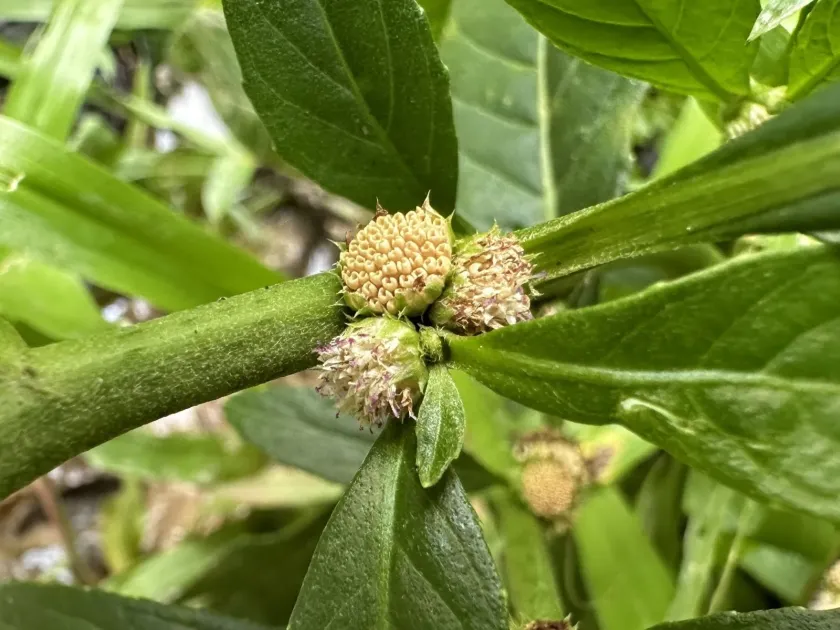
Description
Growing requirements
Struchium sparganophorum is an herbaceous plant belonging to the Asteraceae family, native to tropical Africa and distributed across parts of the Americas and Asia. It is known for its ability to thrive in wet, riparian environments and swampy habitats.
Botanically, it is characterized by simple, alternate leaves and small, sessile flower heads clustered in the leaf axils. The plant can reach significant heights, often acting as a perennial or annual crop depending on the local climatic conditions.
Climate requirements include high humidity and consistent temperatures, as the plant is not frost-tolerant. It performs best in regions where tropical or subtropical conditions provide a year-round growing season without significant temperature drops.
Soil management should prioritize water retention and nutrient availability. Incorporating organic matter into the substrate is essential for supporting the rapid biomass production required for both food and medicinal applications.
Agricultural practices involve maintaining high moisture levels, which can be achieved through drip irrigation or planting in naturally moist zones. Proper spacing is necessary to facilitate airflow and reduce the humidity-related diseases common in these environments.
Main diseases and pests
The primary threats include fungal diseases such as root rot and leaf blight, which are triggered by excessive moisture and poor drainage in the field conditions.
Common pests affecting this crop include aphids and various mite species that thrive in the lush, dense foliage of the plant. These pests can significantly reduce yield quality.
Weed competition is particularly challenging during the establishment phase. Effective management of surrounding vegetation is necessary to prevent the crop from being choked by more aggressive, faster-growing weed species.
Prevention strategies involve regular monitoring and the use of bio-rational pesticides if infestations are identified. Maintaining proper distance between plants helps to reduce pest movement.
Crop rotation is recommended to prevent soil-borne pathogens from building up over consecutive seasons, ensuring the long-term health of the soil and the vigor of the plant population.