
Streptoglossa decurrens
Streptoglossa decurrens
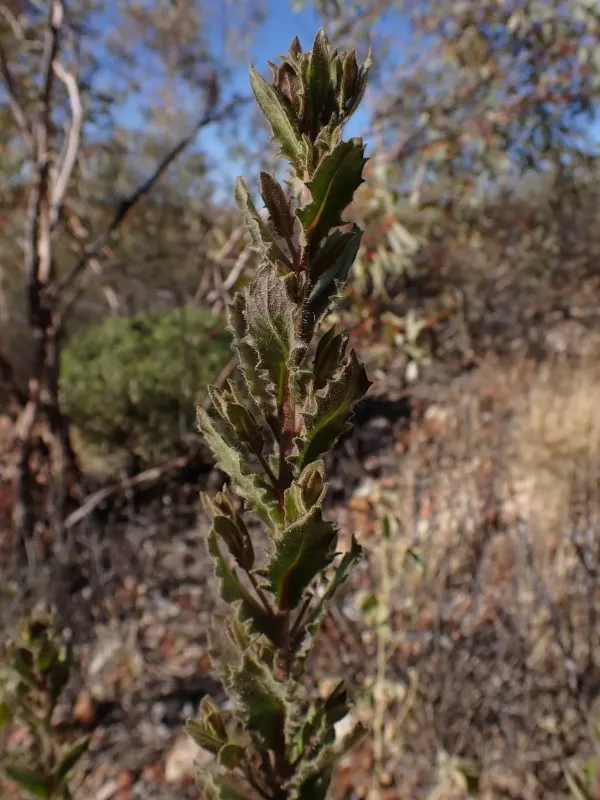
Description
Growing requirements
Streptoglossa decurrens is a herbaceous perennial belonging to the Asteraceae family. This species is native to Australia and is well-adapted to the arid and semi-arid landscapes of the continent, where it thrives in challenging climatic conditions.
Botanically, it is identified as a subshrub that displays decurrent leaves, which help the plant adapt to intense solar radiation and high temperatures. Its foliage often features glandular trichomes that serve to reduce transpiration and moisture loss.
The species prefers well-drained, sandy or gravelly soils that mirror its natural habitat in open woodlands. It shows remarkable resilience to prolonged drought, making it an interesting candidate for ecological restoration in arid zones.
Optimal growth is achieved in areas with significant exposure to sunlight. The plant requires minimal irrigation, as it is physiologically structured to conserve energy and water under high-temperature stress.
In terms of land use, Streptoglossa decurrens serves as a foundational component of native vegetation, contributing to soil stabilization and supporting local biodiversity by providing cover for insects and small reptiles.
Main diseases and pests
The primary threats to this species include habitat fragmentation caused by urban expansion and excessive livestock grazing, which can physically destroy the plant populations. Overgrazing remains a critical concern for native flora in rangelands.
Pests such as leaf-eating beetles and certain lepidopteran larvae can impact the canopy, reducing the photosynthetic potential of the plant. Monitoring of these populations is recommended to prevent significant damage.
Pathogenic threats include root rot and powdery mildew, which can occur when plants are exposed to prolonged damp conditions or poor soil aeration. Maintaining a well-drained substrate is the most effective preventative measure.
Invasive weed encroachment represents a significant competition for light and mineral nutrients, often suppressing the growth of native species. Managed vegetation control is essential for maintaining healthy populations.
Regular field observations are recommended to detect any early signs of fungal infections. Given its wild nature, integrated management strategies are preferred over intensive chemical treatments to ensure ecosystem balance.