
Water soldier
Stratiotes aloides L.
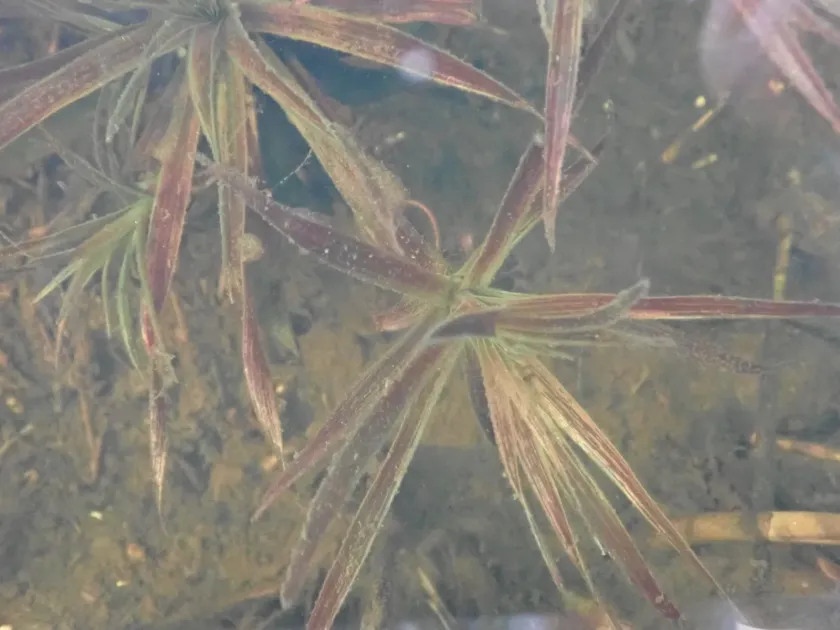
Description
Growing requirements
The water soldier (Stratiotes aloides L.) is a perennial aquatic plant belonging to the Hydrocharitaceae family. It is distinct for its pineapple-like shape and unique ability to move vertically within the water column throughout the year.
Native to Europe and parts of Western Siberia, this plant thrives in standing or slow-moving water bodies. It prefers nutrient-rich environments with soft, muddy substrates where it can anchor its roots during specific growth stages.
The plant requires ample sunlight for optimal development. It is highly adapted to temperate climates and survives harsh winters by sinking to the bottom, where it remains dormant until the water temperature rises in spring.
In terms of practical application, it is utilized as a bio-indicator of water quality and as an effective agent for nutrient uptake in pond management. It helps prevent the excessive growth of algae by competing for essential minerals.
Propagation is primarily vegetative, occurring through the detachment of offshoots from the main rosette. This ensures a rapid expansion of colonies in suitable aquatic environments where conditions remain stable and unpolluted.
Main diseases and pests
Water soldier populations can be threatened by severe water pollution, which disrupts their metabolic functions and leaves them susceptible to decay and fungal infections.
Common pests include certain aquatic larvae and snails that graze on the leaves, occasionally causing significant damage to young shoots in early spring.
Disease outbreaks are often linked to poor water circulation and stagnant conditions that favor the rapid spread of pathogens across the plant's submerged leaves.
The invasion of faster-growing alien species can shade out the water soldier, leading to the decline of local colonies in disturbed or highly eutrophic aquatic ecosystems.
Management in artificial ponds requires manual thinning, as the plant can rapidly cover the surface, reducing oxygen exchange and limiting the space for other aquatic species.