
Stipa ambigua
Stipa ambigua
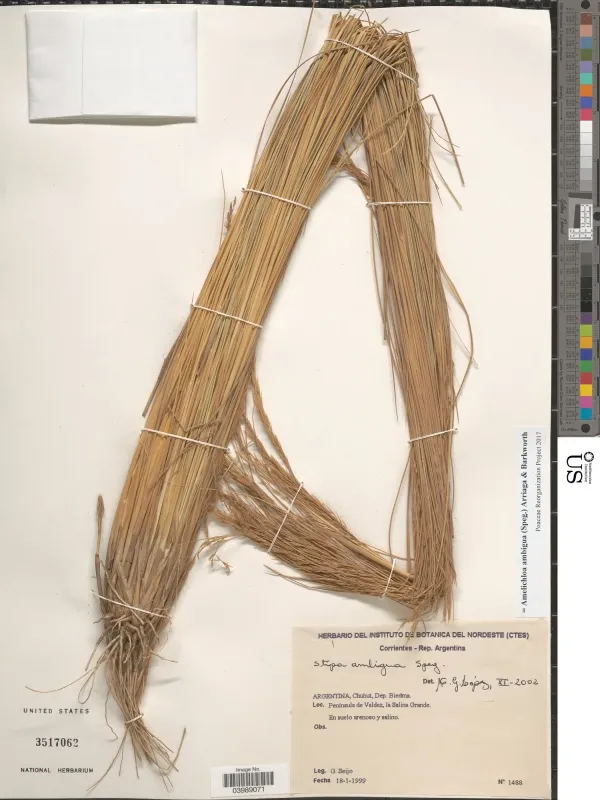
Description
Growing requirements
Stipa ambigua, commonly known as a type of feather grass, belongs to the Poaceae family. It is a perennial herbaceous plant characteristic of the steppe regions, known for its significant drought resistance and adaptability to semi-arid environments.
The plant thrives in well-drained soils, preferring chernozem or chestnut soil types. Its extensive root system allows it to reach deep moisture reserves, which is essential for survival during prolonged hot and dry seasons common in its native range.
Regarding climatic requirements, Stipa ambigua demonstrates remarkable cold hardiness, surviving harsh winter conditions across the Eurasian steppes. It requires full sunlight exposure to maintain optimal photosynthetic activity and biomass production.
Soil aeration is critical for the development of healthy root systems, as the plant is susceptible to waterlogging. It performs best in neutral to slightly alkaline soil conditions, where it can establish a dense, erosion-resistant sod.
Due to its slow initial growth rate, establishing new stands requires proper management to minimize competition from fast-growing weeds during the first year of vegetation.
Harvesting
The primary agricultural use of Stipa ambigua is as a forage resource for livestock. It is valued for its contribution to natural grazing lands, especially during seasons when other vegetation might be limited by heat or dryness.
Timing is critical when harvesting for hay. To maintain nutritional value and palatability, it should be mowed before the inflorescences become woody and sharp. Early harvesting ensures that the forage remains digestible for cattle and sheep.
In grazing management, sustainable stocking rates are essential. Overgrazing can weaken the individual plants, leading to a decline in stand density and potentially allowing invasive species to colonize the area.
The biomass harvested from Stipa ambigua is an excellent source of fiber. When managed correctly, it provides a stable yield that contributes to the overall productivity of steppe-based livestock operations.
Beyond traditional livestock feed, this species is increasingly recognized for its ecological importance in restoring degraded rangelands and preventing wind erosion in vulnerable agricultural zones.