
Staurastrum alternans
Staurastrum alternans
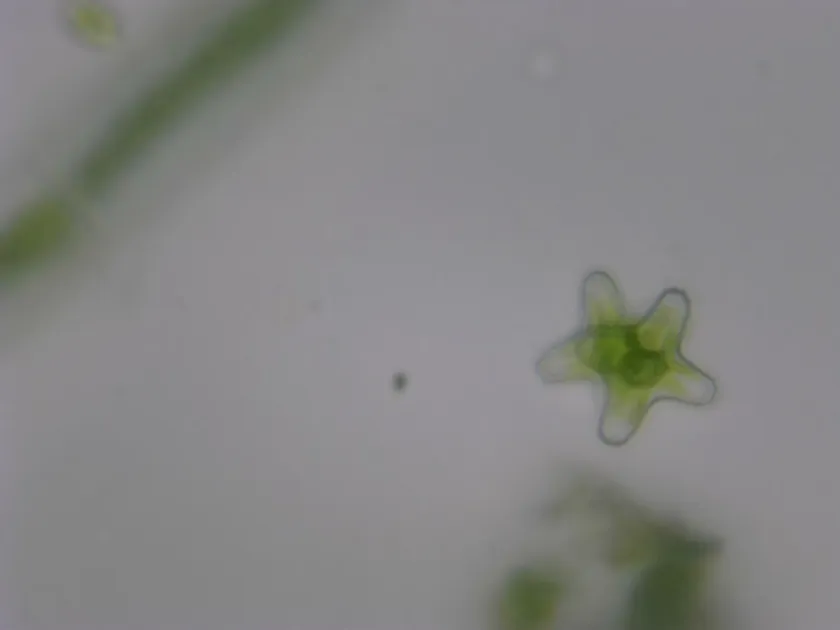
Description
Growing requirements
Staurastrum alternans is a unicellular green alga belonging to the family Desmidiaceae. It is widely recognized by its distinctive morphology, featuring cells that are divided into two symmetrical semicells connected by a narrow isthmus, often with complex ornamentation.
This species naturally thrives in freshwater environments, particularly in oligotrophic to mesotrophic lakes and wetlands. It prefers environments with low nutrient concentrations and slightly acidic to neutral water pH levels.
The metabolism of this alga relies on high-efficiency photosynthesis, supported by large, lobed chloroplasts located within the semicells. Light availability is the primary limiting factor for its growth in natural water columns.
The organism does not require specific agricultural soil or sowing procedures, as it is a natural inhabitant of water bodies. However, it requires stable environmental conditions to maintain healthy population densities.
Research into Staurastrum species is significant for limnology, as they serve as excellent biological indicators for monitoring the chemical health and trophy status of freshwater ecosystems.
Main diseases and pests
The primary threat to Staurastrum alternans is water eutrophication, caused by the runoff of agricultural fertilizers, particularly nitrogen and phosphorus. This leads to algal blooms of competitive species that block light and alter water chemistry.
The introduction of synthetic pesticides and herbicides into water bodies is toxic to desmid algae, disrupting their growth and reproductive cycles, often leading to localized extinction of the species.
Grazing by zooplankton represents a constant biological threat. Crustaceans, such as Daphnia, consume these algae as a primary food source, which can significantly reduce the population during peaks in grazer activity.
Pathogenic organisms, including chytrid fungi and certain viral strains, specifically target desmid populations. These outbreaks can decimate entire local colonies when environmental stress weakens the host organisms.
Climate change and subsequent warming of water bodies can shift the ecosystem balance, making it difficult for the cold-adapted Staurastrum to compete with heat-tolerant phytoplankton species.