
Stackhousia monogyna
Stackhousia monogyna
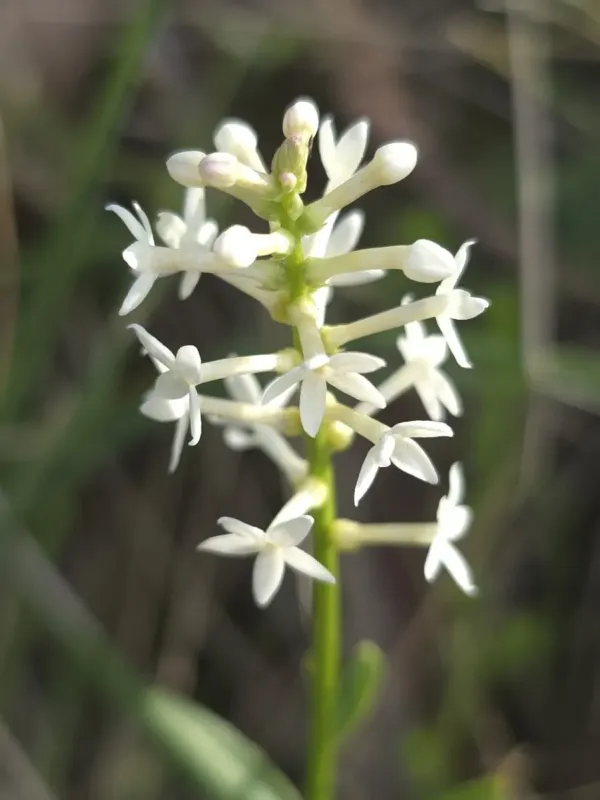
Description
Sowing dates
Stackhousia monogyna, commonly known as cream stackhousia, is a perennial herb belonging to the Celastraceae family. It is a distinctive native Australian plant valued for its fragrant spikes of flowers.
Propagation is typically performed via seeds, which require stratification to break dormancy. Sowing should occur in early spring to coincide with natural growth cycles.
The seeds should be sown in a well-draining, sandy loam mix. Covering them lightly with a thin layer of sand or fine peat will support successful germination.
Maintaining consistent moisture levels is essential until seedlings are established, though the substrate should never be waterlogged.
When propagating by division, which is possible for mature clumps, the process should be carried out in autumn or early spring when the plant is not in its peak growth phase.
Growing requirements
This species thrives in sunny positions with well-drained, slightly acidic to neutral soils. It is well-adapted to habitats with low nutrient availability.
Good drainage is the most critical factor for success. The plant does not tolerate "wet feet" and will quickly decline in heavy, water-retentive clay soils.
While Stackhousia monogyna is hardy, it benefits from a mulch layer to regulate soil temperature and moisture during the hot summer months.
The plant is relatively drought-tolerant once established, requiring supplemental irrigation only during prolonged dry spells.
In terms of fertilization, minimal intervention is needed. Over-fertilizing can negatively impact the plant’s natural growth habit and floral display.
Main diseases and pests
Root rot is the most significant threat to this plant, often triggered by excessive rainfall or poor soil structure that holds water for too long.
Fungal diseases can also affect the foliage if the plants are crowded and lack sufficient airflow, leading to humid microclimates near the base.
Pests such as aphids may occasionally cluster on the flower stalks, which can be managed using natural insecticidal soaps or by encouraging beneficial predatory insects.
Early detection and removing affected parts of the plant can help prevent the spread of infections to healthy neighbors.
- Ensure excellent drainage
- Allow soil to dry between waterings
- Provide adequate spacing
- Monitor for aphid activity