
Staavia radiata
Staavia radiata
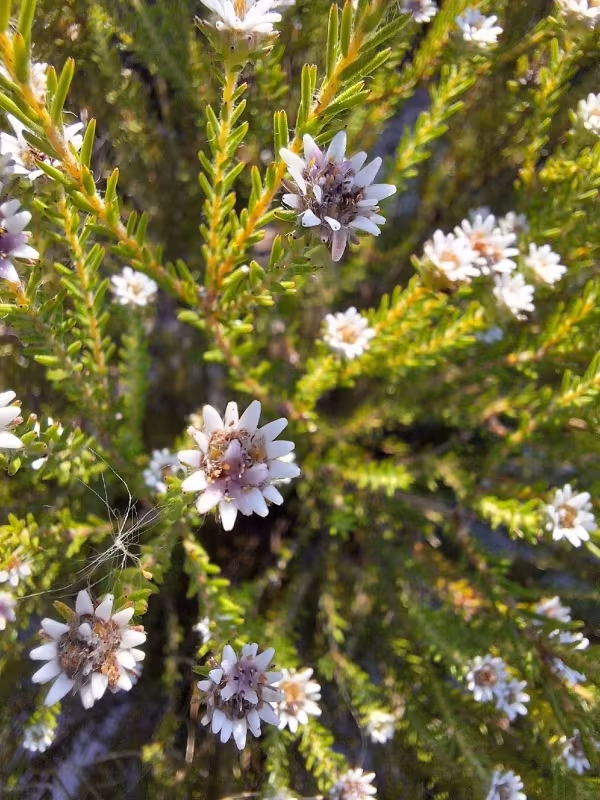
Description
Sowing dates
Staavia radiata is a distinctive evergreen shrub belonging to the Bruniaceae family, highly valued in the commercial floriculture sector. The cultivation cycle begins with careful propagation, typically via seeds or cuttings.
Seeds require specific cold stratification treatments to break dormancy and ensure uniform germination. They are sown in a well-draining, acidic medium, often utilizing a mix of peat and sand to mimic the native habitat conditions.
Cuttings are favored for ensuring genetic uniformity in large-scale production. Semi-hardwood cuttings are taken during the active growth phase and treated with rooting hormones before being placed in a mist propagation bench.
Young seedlings must be handled with care when transplanting to avoid root damage. Maintaining a stable environment with high humidity and moderate temperatures is crucial during the initial establishment period.
Spacing for mature plants is generally kept between 50 and 70 centimeters. This density allows for adequate airflow throughout the canopy, which is essential to prevent moisture-related diseases in a commercial setting.
Growing requirements
Native to the Cape floral region of South Africa, Staavia radiata thrives in specific ecological niches. It requires acidic, well-draining soils with very low phosphorus levels, as it is highly sensitive to nutrient toxicity.
The climate requirement is strictly temperate with cool, wet winters and dry, mild summers. Extreme heat and heavy frost are detrimental to the health and productivity of the shrubs, necessitating protected cultivation in colder zones.
Water management is the cornerstone of its agronomy. While the plants require consistent moisture, they strictly avoid waterlogged conditions, making high-quality drainage systems a non-negotiable infrastructure investment.
Sunlight exposure should be high to maintain the plant's natural compact structure. Shaded conditions lead to weak stems and poor flower quality, which directly impacts the market value of the cut stems.
Monitoring the soil pH level is vital, keeping it consistently between 5.5 and 6.5. Deviations from this range can impede nutrient uptake and lead to severe physiological stress in the plants.
Main diseases and pests
The most common threat to Staavia radiata is root rot, typically caused by Phytophthora or Pythium species. These pathogens thrive in poorly drained soils and can quickly compromise the entire vascular system.
Pests such as spider mites and aphids are known to inhabit the dense foliage. These pests can cause significant damage to the plant's aesthetic appeal, requiring early detection and organic control measures.
Grey mold (Botrytis) represents a significant risk during periods of high humidity. Proper plant spacing and greenhouse ventilation are the primary defenses against this fungal infection in intensive farming.
Maintaining a strict hygiene protocol is necessary to manage potential disease outbreaks. Removing plant debris from the base of the shrubs helps prevent the accumulation of fungal spores and pests.
If chemical interventions become necessary, they should be applied with extreme caution. The plant's sensitivity to synthetic fertilizers and pesticides requires precise application to prevent leaf scorch and systemic damage.
Harvesting
Harvesting Staavia radiata is a manual task performed at the peak of floral development. The characteristic radiata-shaped heads should be fully open and firm to the touch before cutting.
Clean, sharp shears are used to cut stems at the base, ensuring minimal physical damage to the plant. Morning harvests are prioritized to ensure the highest stem turgidity and extended vase life.
Post-harvest handling involves immediate transfer to cooling facilities. Maintaining a cool chain from the field to the floral market is essential for maximizing the longevity of the stems in commercial arrangements.
The stems of Staavia radiata are excellent for drying. By allowing them to dry in a controlled, dark environment with good airflow, producers can transform excess production into high-demand permanent floral products.
Strategic pruning after harvest helps rejuvenate the plant for future seasons. By removing old stems and promoting new vegetative growth, growers ensure consistent and high-quality production year after year.