
Sporobolus tenuissimus
Sporobolus tenuissimus
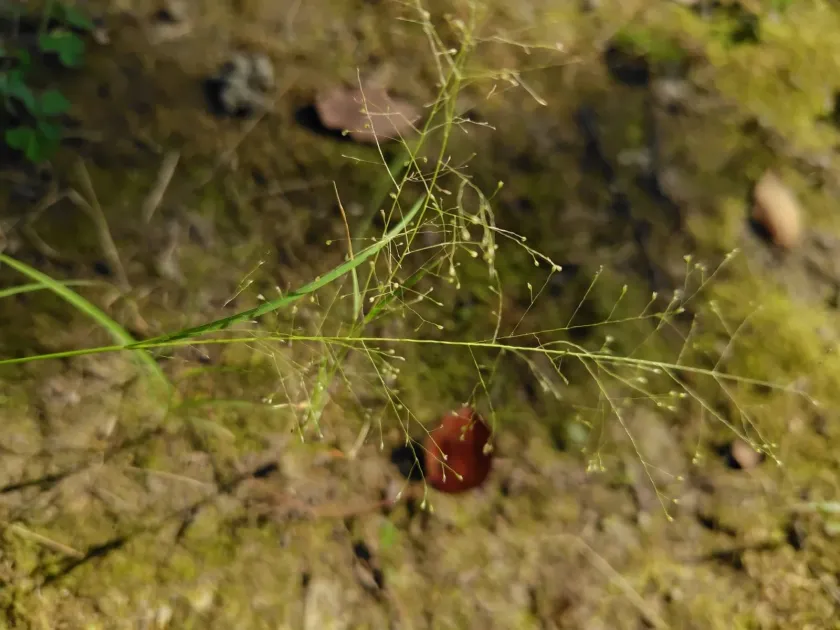
Description
Sowing dates
Sporobolus tenuissimus is a warm-season grass that requires optimal soil temperatures for successful establishment, ideally between 18 and 22 degrees Celsius.
Sowing should be timed to coincide with the start of the rainy season or consistent warm weather to ensure that moisture is available for the germination of the small seeds.
Seeds should be broadcast or drilled at a shallow depth, usually not exceeding 1.5 centimeters, to allow for sufficient light and air access during the initial development stages.
Firming the soil with a roller after seeding is highly recommended to improve soil-to-seed contact and prevent the seeds from being washed away or drying out prematurely.
The seedling phase requires careful management to ensure that early weed competition does not suppress the slow-growing young plants before they reach full establishment.
Growing requirements
This species belongs to the Poaceae family and is widely recognized for its robust nature and ability to thrive in poor, sandy, or degraded soil conditions.
It is a highly photophilous plant, meaning it requires full sun exposure to maintain vigorous growth and produce sufficient biomass for agricultural use.
Sporobolus tenuissimus exhibits impressive drought tolerance, making it a reliable choice for semi-arid environments where other forage species might struggle to survive.
While it is adaptable to various soil types, it performs best in well-drained soils where there is no risk of permanent waterlogging or excessive nutrient accumulation.
Nutrient requirements are relatively modest compared to intensive cereal crops, as this grass is naturally evolved to efficiently utilize limited resources in its native range.
Main diseases and pests
The plant is generally resilient to most common agricultural pathogens, showing natural resistance due to its physiological traits and secondary metabolites.
Potential threats include foliar fungi, especially in high-humidity climates, which can manifest as dark spots on the leaf blades if airflow is severely restricted.
Insect pests such as leaf-sucking bugs or localized larvae can pose a risk, but these are rarely an issue if the crop is managed with regular grazing or mowing.
Maintaining a balanced ecosystem through proper field management is the most effective strategy to prevent any significant impact from diseases or harmful insects.
- Implementing systematic soil management.
- Ensuring adequate spacing between plants.
- Monitoring for early signs of fungal issues.
- Promoting biodiversity within the pasture.
Harvesting
The primary use of this grass involves grazing, as it offers a consistent supply of forage that recovers well even after intensive feeding periods.
For hay production, it is crucial to harvest before the plant enters the seed-set phase, ensuring that the nutritional content remains high for livestock consumption.
Seed harvesting requires mechanical precision, as the seeds shatter easily; therefore, farmers often employ early harvesting methods to prevent significant yield losses.
The regrowth cycle of the plant is vigorous, allowing for multiple harvests within a single growing season if moisture and nutrient levels are correctly managed.
Utilizing proper equipment for mowing and drying is essential to ensure that the biomass is processed efficiently while preserving its quality as a reliable animal feed.