
Sporobolus pungens
Sporobolus pungens
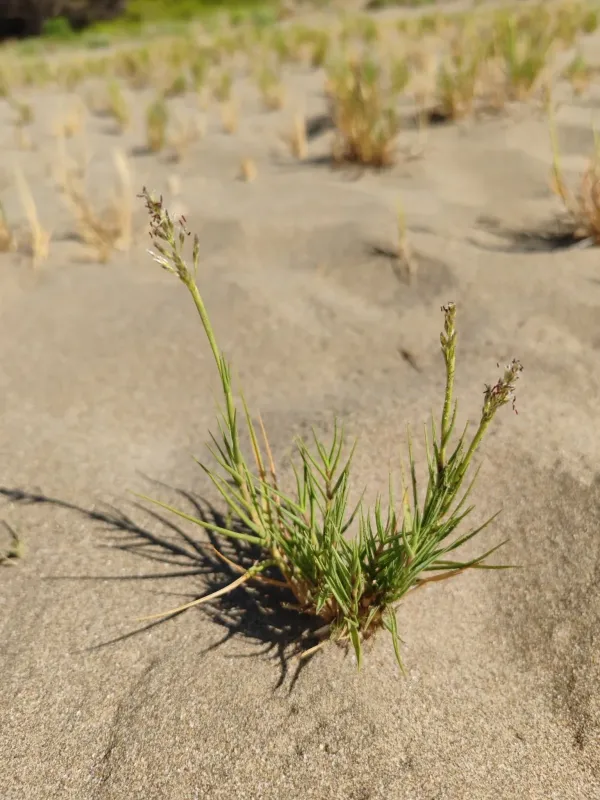
Description
Growing requirements
Sporobolus pungens is a perennial grass species belonging to the Poaceae family. It is predominantly found in coastal environments, where it plays a vital role in stabilizing sandy soils and coastal dunes due to its extensive and robust rhizomatous root system.
As a specialized halophyte, this plant is exceptionally adapted to saline environments. It exhibits physiological mechanisms that allow it to thrive in soils with high salt content, where traditional agricultural crops would fail to survive or develop properly.
In terms of habitat, Sporobolus pungens requires full sun exposure. It is highly intolerant of shade, meaning that site selection must prioritize areas with minimal canopy cover to ensure the health and vigor of the plants throughout the growing season.
Soil requirements are relatively specific: the substrate must be well-drained and typically sandy. While the plant is highly drought-tolerant, it relies on deep root systems to access subsurface moisture in its native maritime habitats.
Regarding agrotechnology, the species is relatively low-maintenance once established. Its ability to withstand strong winds and salt spray makes it a premier choice for ecological restoration projects along shoreline areas where environmental stress is high.
Main diseases and pests
The most significant threat to Sporobolus pungens is poor soil drainage leading to waterlogging. Excessive moisture around the root zone quickly promotes the growth of various soil-borne pathogens, which can lead to rapid decay of the root system.
Fungal diseases are occasionally observed, particularly in environments where high humidity levels persist for extended periods. These conditions can favor the development of powdery mildew or other foliar infections that weaken the plant's overall structure.
While the plant is generally resistant to many common agricultural pests, herbivory by certain localized insect populations can occur. However, the high salinity content within the leaf tissues serves as a natural deterrent against most generalized insect feeders.
Invasive weed species pose a substantial threat during the establishment phase. Because the initial growth rate of Sporobolus pungens is relatively slow, proactive weed management is necessary to prevent competition for essential nutrients and sunlight.
To maintain a healthy stand, it is essential to monitor for signs of chlorosis or leaf spot. Providing adequate spacing during planting and ensuring that the substrate mimics natural maritime conditions remains the best preventative measure against disease outbreaks.