
Sporobolus mauritianus
Sporobolus mauritianus
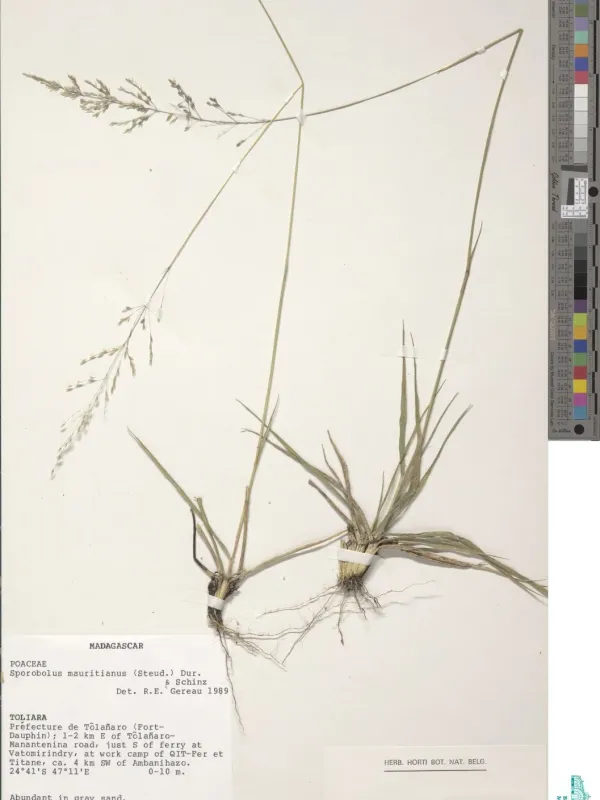
Description
Sowing dates
Sporobolus mauritianus is a perennial grass species that reproduces both by seed and via vigorous vegetative growth, allowing it to colonize available substrates effectively in its native habitat.
Sowing should ideally coincide with the onset of the wet season, as high soil moisture and warm temperatures are critical requirements for achieving successful germination and initial establishment.
The seeds should be sown at a shallow depth to ensure they receive sufficient light while remaining in contact with the moisture-retaining soil surface layer, which is vital for early development.
Proper seedbed preparation is recommended, involving the removal of existing weed competition, as the initial growth phase of the seedlings is relatively slow compared to aggressive weeds.
Maintaining consistent soil moisture during the first few weeks after sowing is essential to prevent seedling desiccation and ensure a uniform stand density across the entire cultivated area.
Growing requirements
As a member of the Poaceae family, this grass shows remarkable adaptation to varied soil conditions, although it thrives best on well-drained soils with a balanced nutrient content.
This species is highly adapted to tropical and subtropical climates, requiring sustained warm temperatures to maintain active growth rates throughout the entire agricultural season.
Sporobolus mauritianus exhibits high light requirements, as it is shade-intolerant; exposure to full sun is necessary for the plant to achieve its potential biomass and nutritional quality.
While the plant possesses moderate drought tolerance, sustained productivity is only achieved under conditions of adequate rainfall or supplementary irrigation during extended dry spells.
Soil pH levels should ideally fall within the neutral range, as extreme acidity or alkalinity may limit the availability of essential micronutrients required for healthy tiller development.
Yield
The primary agricultural application for this species is as a forage grass for livestock grazing, providing a stable source of feed in tropical regions where seasonal forage can be scarce.
Biomass productivity is closely tied to grazing management; a rotational grazing system is strongly advised to allow the root reserves to recover between each period of utilization.
When harvested for hay, the quality is highest when the plant is cut during the vegetative stage, prior to the onset of flowering, to maximize the protein content in the foliage.
Fertilizer application, particularly nitrogen-based supplements, can significantly boost the yield per hectare, making it a viable crop for more intensive livestock farming operations.
Under optimal management, the stand can remain productive for many years, providing a persistent and reliable source of fodder that supports sustainable herd management practices.
Main diseases and pests
The major phytosanitary concerns involve fungal diseases that flourish in high-humidity environments, which can compromise the photosynthetic efficiency of the leaves and reduce overall yields.
Insects, particularly those that feed on young shoots, pose a risk to establishment success; vigilance is required during the early growth stages to identify and manage potential infestations.
Overgrazing represents a significant threat to the long-term viability of a field, as it depletes root carbohydrate stores and increases the susceptibility of the stand to weed invasion.
Managing the risk of disease requires keeping the canopy open and ensuring adequate airflow, which can be achieved through regular mowing or properly timed grazing cycles.
Early identification of pest pressures or environmental stress is the most effective way to protect the crop, enabling corrective management actions before the stand becomes irreparably damaged.