
Sporobolus ioclados
Sporobolus ioclados
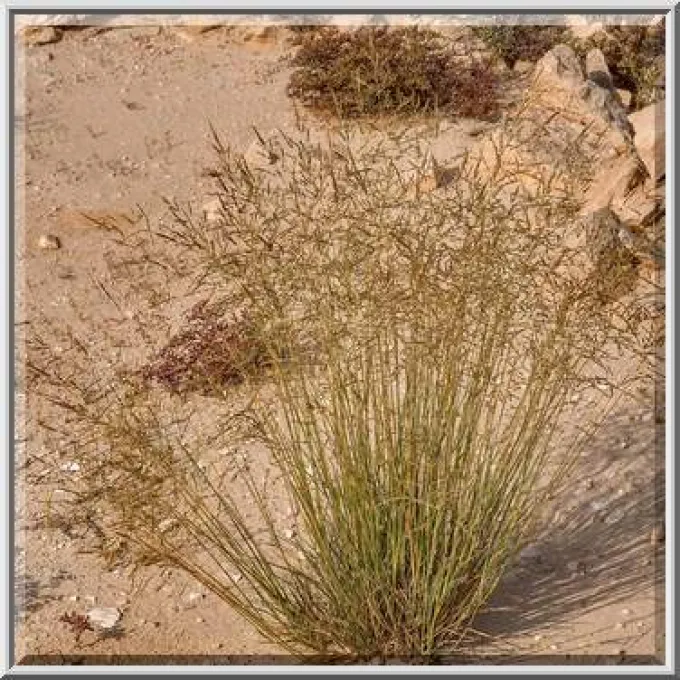
Description
Growing requirements
Sporobolus ioclados is a perennial grass species within the Poaceae family. It is recognized for its significant role in arid-land agriculture, providing reliable biomass where other species fail to establish.
Originating from regions with erratic rainfall patterns, the plant has evolved to tolerate intense heat and moisture scarcity. This biological resilience makes it an ideal candidate for restoration projects in drylands.
The crop thrives in various soil types, ranging from sandy loams to saline-alkaline soils. Its ability to tolerate salt concentrations that inhibit many common crops is one of its primary agricultural advantages.
Cultivation requires careful seedbed preparation, as the seeds are small and require good soil-to-seed contact. Once established, the plant develops an extensive root system, which contributes to soil stability and prevents erosion.
Primarily used as forage, this grass is highly valued by livestock producers for its persistence under grazing pressure. Additionally, it serves as a crucial element in environmental conservation to reclaim degraded and barren lands.
Main diseases and pests
The plant is generally robust, but excessive moisture levels often lead to fungal infections such as leaf rust. Management of drainage is essential to minimize these risks during the rainy season.
Pest pressure from locusts and grasshoppers is common in its native range. Integrated pest management strategies are recommended to mitigate significant biomass losses during peak growing stages.
Competition from invasive weeds during the germination phase is a major threat. Mechanical weeding or careful site selection is necessary to ensure the crop gains a competitive advantage over local weeds.
Overgrazing poses a severe threat to the long-term sustainability of the pasture. Implementing a rotational grazing system helps protect the plant's crown and promotes faster recovery after consumption.
Nutrient deficiency, particularly in degraded soils, can make the grass susceptible to opportunistic pathogens. Periodic assessment of soil fertility and appropriate amendments can bolster the plant's natural defenses.