
Giant dropseed
Sporobolus giganteus
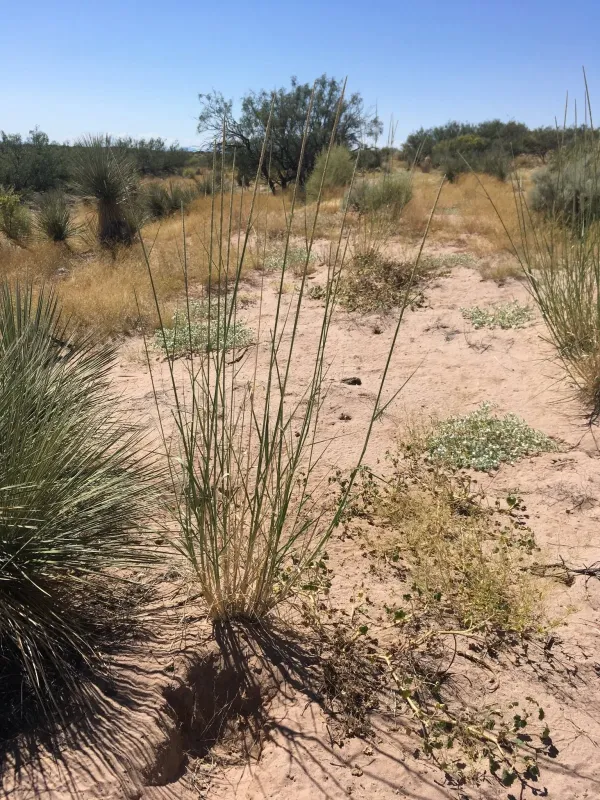
Description
Sowing dates
The sowing of giant dropseed is primarily conducted during the spring period when soil temperatures rise, promoting active seed germination. It is crucial to choose a time when the risk of night frost is minimized.
Seeds of this species are small, so they should be sown at a shallow depth. Ensuring good contact between seeds and moist soil is essential for achieving high germination rates in the field.
For commercial cultivation, row seeding is commonly used. This method ensures uniform plant distribution across the area and simplifies subsequent management of the stand.
After seeding, it is recommended to use a roller to improve capillary moisture movement from deeper soil layers. In arid regions, light irrigation during the first two weeks significantly improves seedling survival.
A second sowing window is possible in late summer, provided there is adequate rainfall. This allows plants to establish well before the onset of the dormant winter season.
Growing requirements
Giant dropseed belongs to the Poaceae family and is a specialized xerophyte. It is highly adapted to life in sandy soils and regions characterized by limited annual precipitation.
The plant possesses a robust root system, enabling it to extract moisture from deep soil horizons. This feature makes the species indispensable for stabilizing shifting sands in deserts and semi-deserts.
Well-drained sandy or loamy-sand substrates are required for optimal development. Waterlogging and heavy clay soils are strictly unsuitable, as they cause root decay and plant mortality.
This culture is highly heliophilic and requires full sunlight throughout the day. Under shaded conditions, the growth of above-ground biomass is restricted, leading to reduced overall productivity.
The plant demonstrates remarkable tolerance to extreme temperatures. It can survive intense heat and withstand significant diurnal temperature fluctuations typical of arid climate zones.
Yield
The agricultural use of giant dropseed is primarily aimed at establishing grazing pastures in regions with harsh conditions. Although the leaves have a tough structure, young growth is readily consumed by livestock.
The primary value of the crop lies in its ability to stabilize mobile sands. Biomass yield is directly dependent on the stand density and the amount of precipitation during the growing season.
With rational grazing management, the stand can maintain productivity for many years. It is important to avoid overgrazing, allowing the plants sufficient time to recover their leaf area after being grazed.
In agronomic practices, it is often mixed with other drought-resistant grass species. This mixture ensures a stable supply of forage even during years of severe drought when other crops fail.
Peak productivity is typically observed in mid-summer. Managing grazing intervals helps maintain an optimal balance between the nutritional quality of the forage and the longevity of the turf.
Main diseases and pests
Giant dropseed exhibits high phytosanitary resistance, characteristic of species adapted to extreme environments. Most pathogens that affect common field crops do not cause significant damage to this grass.
The main threat comes from herbivorous insects that can damage seeds or young seedlings. Various species of grasshoppers are notable for their ability to destroy young stands during mass outbreaks.
Fungal diseases, such as rust or powdery mildew, are extremely rare. These may only develop under conditions of abnormally high humidity combined with excessive stand density.
Damage to the root system by soil-dwelling pests can negatively affect plant development. However, in sandy soils, the activity of such pests is usually limited by unfavorable environmental conditions.
Disease prevention involves adhering to proper agronomic standards and maintaining moderate stand density. Chemical control methods are justified only when the economic threshold of damage is reached.