
Sporobolus flexuosus
Sporobolus flexuosus
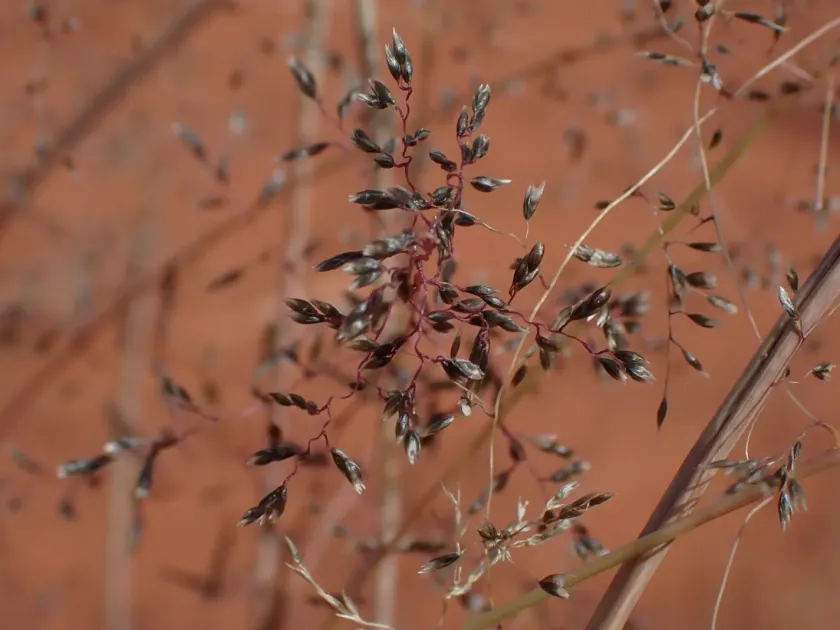
Description
Sowing dates
Sporobolus flexuosus, commonly known as mesa dropseed, is a perennial bunchgrass. Planting should be scheduled for the spring season to allow the crop to establish during the period of increasing temperatures.
Seedbed preparation requires a clean, weed-free surface. Given the small size of the seeds, they should be sown shallowly and covered with a very thin layer of soil or pressed firmly to ensure contact.
Using a drill seeder or a broadcast seeder followed by harrowing is recommended to ensure uniform distribution and proper establishment across the field area.
The establishment phase is generally slow. During the first growing season, the plant allocates significant energy to developing its root system, making it vulnerable to invasive weed competition.
Once established, the grass forms dense tufts that are capable of self-seeding and maintaining a stable population over many years without the need for frequent reseeding.
Growing requirements
As a member of the Poaceae family, this species is highly adapted to arid and semi-arid environments, thriving in sandy soils and regions with limited rainfall.
It prefers well-drained, porous soil textures where it can penetrate deeply with its roots, making it an excellent candidate for land stabilization in sandy terrain.
The plant exhibits remarkable drought tolerance. It remains metabolically active under high temperature and water stress conditions, providing greenery when other species may wither.
Full sunlight is a critical requirement for optimal growth. Shaded environments inhibit the development of dense bunches and significantly reduce the plant's overall biomass production.
Tolerance to temperature fluctuations is high, reflecting its native range in desert landscapes. It does not require intensive fertilization or supplemental irrigation for survival.
Yield
Yield levels are modest compared to irrigated fodder crops, but its forage quality is valuable in environments where few other plants can provide consistent grazing resources.
The grass is highly palatable to livestock, including cattle and goats, especially during the early vegetative stages before the stems become overly fibrous and lignified.
Nutritional value peaks during the early growing season. Proper management ensures that livestock consume the biomass before the plant enters the reproductive phase, which decreases forage quality.
While primarily a pasture species, it can be harvested for hay if managed correctly. Harvesting should occur during the peak vegetative stage to ensure the highest potential crude protein content.
The production cycle is closely linked to seasonal rainfall patterns, which trigger growth pulses. Grazing intensity should be adjusted based on the current season's moisture availability.
Main diseases and pests
Sporobolus flexuosus is noted for its resistance to common agricultural pests and diseases. Its tough, narrow leaves are inherently less susceptible to fungal pathogens.
Insect pressure is generally low, reducing the need for chemical interventions. This makes the grass an ideal candidate for low-input or organic livestock production systems.
The primary threat to stand health is overgrazing. Continuous heavy grazing can deplete root reserves and lead to soil compaction, reducing the plant's long-term competitive ability.
Invasion by non-native species can be a concern if the rangeland is severely degraded. Maintaining a healthy density of mesa dropseed helps prevent the encroachment of unwanted weeds.
Climate change impacts on regional precipitation could affect the timing of active growth, requiring management strategies that focus on flexible stocking rates to preserve range health.
Harvesting
The most common harvest method is managed grazing. Allowing the plant to recover after heavy grazing is essential to prevent depletion of the perennial rootstock.
Hay production requires mechanical mowing. Stems should be cut before reaching full maturity to minimize the proportion of indigestible fiber in the final baled product.
After cutting, the biomass should be dried effectively in the field to prevent mold and nutrient loss, particularly in arid regions where rapid drying is usually feasible.
Strategic grazing management involving rotational cycles helps maximize the nutritional uptake while ensuring the long-term sustainability of the stand by allowing the plant to set seeds.
Storing harvested hay in ventilated, dry structures is necessary to maintain forage quality throughout the winter months when the grass enters its natural dormancy period.