
Sporobolus elongatus
Sporobolus elongatus
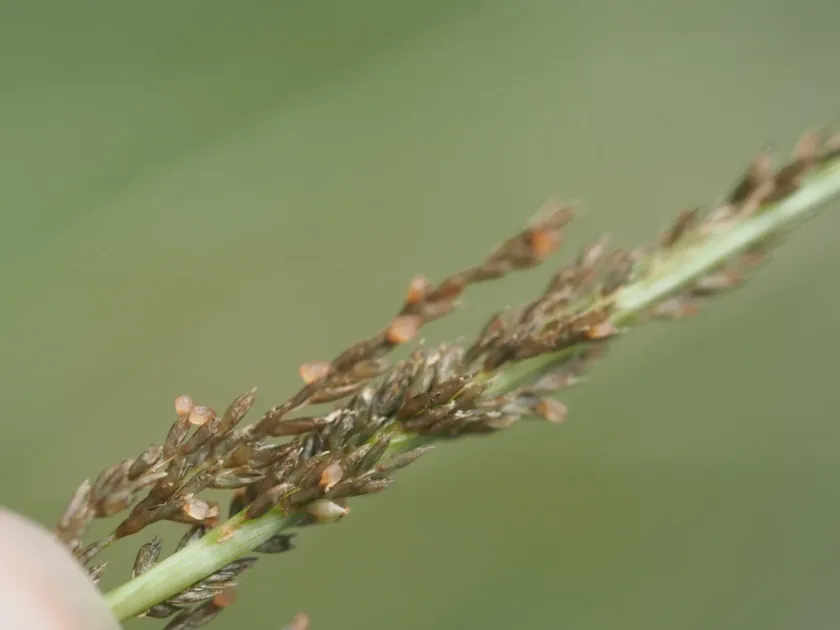
Description
Sowing dates
Sporobolus elongatus is a perennial grass that is typically sown in the spring when soil temperatures allow for rapid germination and root development.
The seeds are relatively small, so they require a finely prepared seedbed to ensure they have adequate contact with the soil for moisture absorption.
Planting depth should be kept shallow, ideally between 1 and 2 centimeters, to prevent the seedlings from exhausting their energy reserves before reaching the surface.
In pasture improvement programs, no-till drilling methods are often employed to sow the seeds directly into existing stands, minimizing soil disturbance.
Post-sowing compaction is highly recommended to improve soil-to-seed contact, which is crucial for achieving high germination rates in diverse environmental conditions.
Growing requirements
This species belongs to the Poaceae family and is known for its remarkable ability to adapt to various environmental stressors and soil conditions.
Sporobolus elongatus thrives in full sun exposure and is highly tolerant of drought, making it an excellent choice for arid or semi-arid regions.
It prefers well-drained soils and shows a particular resilience when grown on nutrient-poor or degraded substrates where other grasses might struggle.
The plant demonstrates significant tolerance to varying soil pH levels, although it performs best in neutral to slightly acidic soil environments.
Optimal growth temperatures range from 20 to 28 degrees Celsius, though it exhibits high heat tolerance during the peak of the summer season.
Yield
The yield potential of Sporobolus elongatus is primarily influenced by moisture availability and the fertility level of the soil in the cultivation area.
While it is a hardy grass, supplemental nitrogen applications can significantly increase the total biomass production, especially during the active growth phase.
It provides a consistent source of forage throughout the growing season, which is particularly valuable in rotationally grazed livestock systems.
When managed properly, the stand can remain productive for several years, providing reliable yields without the need for frequent re-seeding.
Harvesting at the correct phenological stage ensures that the nutritional content, particularly protein levels, is optimized for livestock feed.
Main diseases and pests
Sporobolus elongatus is generally resistant to many common fungal diseases that affect other forage grasses, largely due to its robust leaf structure.
Potential threats include soil-dwelling pests like wireworms, which can cause damage to the root system during the early stages of plant establishment.
In areas with stagnant water or poor drainage, the plant may become susceptible to root rot, necessitating strict adherence to site preparation protocols.
Weed competition during the establishment phase is the most significant threat, often requiring early intervention through mechanical or chemical control.
Integrated pest management strategies focusing on crop rotation and balanced soil fertility are usually sufficient to mitigate most threats.
Harvesting
Harvesting for hay should ideally occur during the booting to early flowering stages to maximize the balance between yield and nutritional quality.
A cutting height of at least 5 to 7 centimeters is essential to preserve the plant's ability to regrow rapidly after harvest.
Field drying should be managed effectively to reduce moisture content to safe storage levels, preventing mold and maintaining forage quality.
In grazing applications, rotational grazing practices should be implemented to prevent overgrazing and protect the plant's long-term vitality.
Seed harvesting should be timed carefully as the spikelets reach maturity to avoid significant yield losses due to natural seed shattering.