
African mahogany
Spirostachys africana
Description
Growing requirements
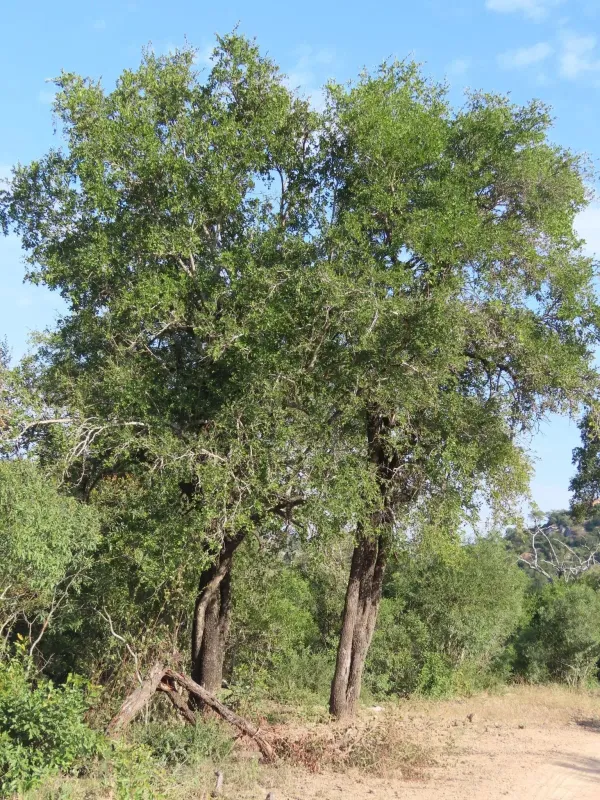
Spirostachys africana, commonly known as Tamboti, is a tree species belonging to the Euphorbiaceae family. It is a deciduous, medium-sized tree that can reach a height of approximately 10 to 15 meters in its native habitat.
The species is indigenous to the southern regions of Africa, including countries such as South Africa, Zimbabwe, and Botswana. It is typically found in savanna landscapes, riverine forests, and areas with sandy, well-draining soils.
The plant thrives in warm climates with alternating wet and dry seasons. It is highly drought-tolerant, which allows it to survive in arid environments where water resources are restricted during most of the year.
Botanically, it is recognized by its distinctively rough bark and its ability to secrete a highly toxic milky latex if damaged. This latex is a potent irritant, serving as a natural defense mechanism against herbivores.
From an industrial perspective, the wood of Spirostachys africana is highly sought after. Its extreme hardness, density, and lingering aromatic properties make it one of the most valuable timber resources in the region for high-end furniture and carving.
Main diseases and pests
Despite its natural defenses, the species is susceptible to various pests, including wood-boring beetles that can affect the inner structure of the stem. Young trees in nurseries or plantations require careful monitoring to prevent infestation.
Fungal pathogens may occasionally infect the wood, especially if the tree is exposed to prolonged periods of high humidity or excessive moisture in the root zone, which can lead to timber decay and loss of commercial value.
The highly toxic nature of the tree reduces the risk from many generalist herbivores. However, severe environmental changes can weaken the immunity of the trees, making them more susceptible to opportunistic infections.
Over-harvesting remains the primary threat to the wild populations of Tamboti. Sustainable management of forest resources is essential to ensure that this slow-growing timber species is not exhausted in its natural range.
Effective forestry practice for this species involves selecting sites that mimic its natural moisture preferences while ensuring the trees are protected from human interference and mechanical damage to their bark.