
Indian pink
Spigelia marilandica (L.) L.
Description
Sowing dates
Spigelia marilandica, commonly known as Indian pink, is an herbaceous perennial plant belonging to the Loganiaceae family. Native to the woodlands of the United States, it is highly valued for its striking, trumpet-shaped flowers.
Propagation through seeds requires cold stratification for several weeks to break dormancy. Seeds should be sown in autumn to allow for natural exposure to fluctuating winter temperatures, ensuring better germination rates in the spring.
Vegetative propagation by division is the most efficient method for maintaining large plantings. The root system should be divided during the early spring or autumn, ensuring that each piece contains enough buds for new growth.
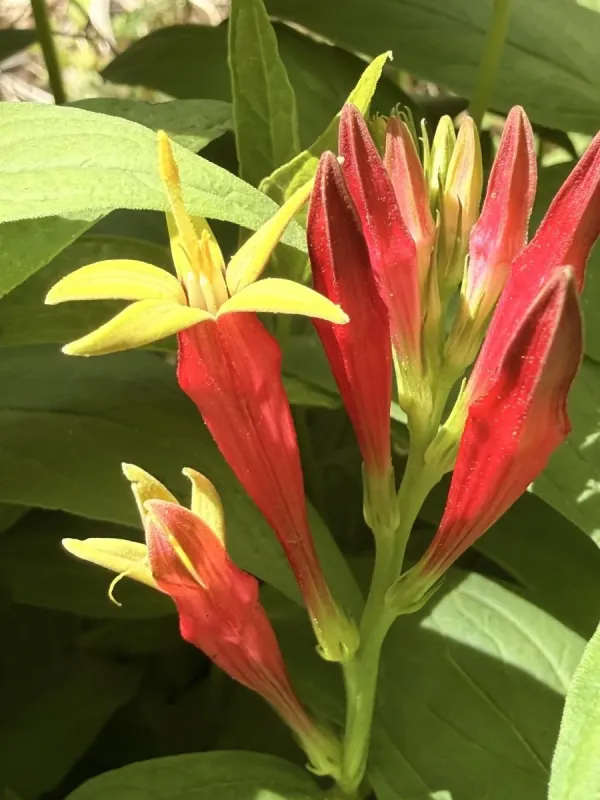
The plant features bright red exterior petals with yellow interior throats, creating a unique color contrast that attracts hummingbirds. This aesthetic quality makes it a popular choice for native plant gardens.
Botanically, it grows to about 60 cm in height with opposite, dark green lanceolate leaves. Its growth habit is typically clumping, and it adds significant visual appeal to shade gardens throughout the growing season.
Growing requirements
Indian pink thrives in rich, well-draining, and consistently moist soil. It is particularly fond of areas with high organic content, mimicking the natural conditions of the deciduous forest floor.
Shade or partial shade is the preferred exposure for this species. Intense afternoon sunlight can be detrimental, leading to leaf scorching and rapid moisture loss, which the plant struggles to recover from.
Consistent moisture is vital, especially during the active blooming season. Gardeners should ensure that the plant never dries out completely, as its root system is sensitive to prolonged periods of drought.
Adding a layer of leaf mulch around the base of the plant helps maintain soil temperature and moisture levels. This organic approach also suppresses weed growth and improves the nutrient profile of the soil over time.
In pots or containers, it is essential to use a mix that retains water but still allows for drainage, such as a blend of peat, perlite, and decomposed organic matter to ensure root health.
Main diseases and pests
The primary threats to Indian pink include fungal issues triggered by poor air circulation or overwatering. Root rot is a common ailment that occurs if the soil remains waterlogged for extended periods.
Pests are generally not a major concern due to the plant's biological characteristics. However, aphids may occasionally attack the tender new growth during periods of dry, hot weather, requiring light treatment.
Slugs and snails can cause damage to the foliage, especially in spring when the young shoots are most vulnerable. Physical barriers or eco-friendly baits are recommended if infestation occurs.
Good sanitation practices are key to disease prevention. Removing dead plant matter in the autumn prevents pathogens from overwintering and infecting new growth in the following season.
If fungal spots appear on the leaves, removing the affected foliage and providing more space between plants will usually suffice to stop the spread of the infection without the need for chemicals.