
Sphaerocarpos texanus
Sphaerocarpos texanus
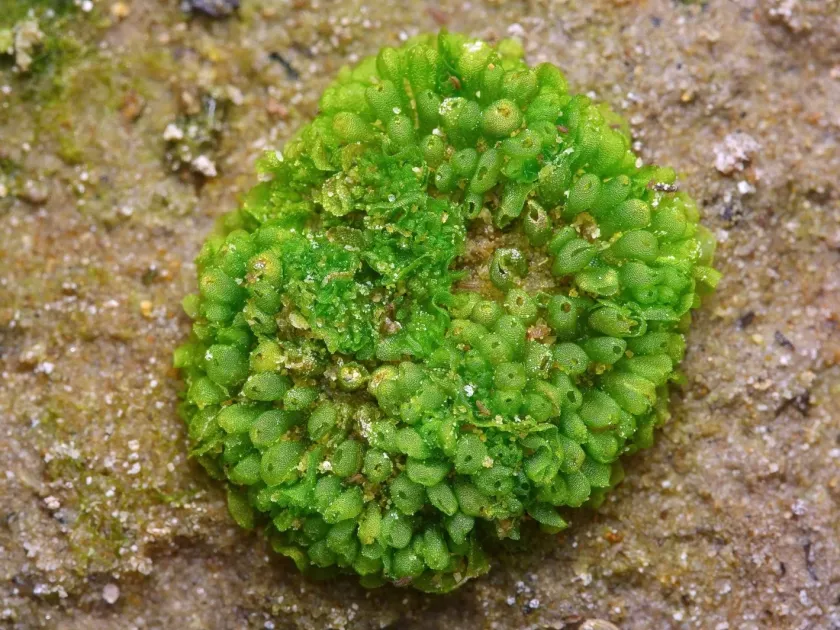
Description
Growing requirements
Sphaerocarpos texanus is not an agricultural crop but a specialized member of the Sphaerocarpaceae family within the liverwort division. Often referred to as a species of interest in bryology, it plays a specific role in the colonization of bare, disturbed soil surfaces in various temperate regions of the world.
The distribution of this species spans North America, Europe, and parts of Australia. It typically occupies open habitats, including ephemeral pool edges, pastures, and agricultural fringes where competition from larger vascular plants is limited, allowing this small bryophyte to thrive.
Botanically, it displays a distinct sexual dimorphism. The female gametophytes produce unique, spherical-shaped involucres that encase the sporophytes, providing protection during development. This structural feature is the primary diagnostic characteristic used by botanists for identification.
Regarding climatic requirements, the plant is highly dependent on seasonal moisture. As an ephemeral species, it completes its life cycle rapidly during wet seasons, essentially avoiding the stress of summer heat or winter cold by remaining in a dormant spore state when conditions are unsuitable.
The substrate preference focuses on stable, moist, and neutral to slightly acidic soils. It requires an open canopy to receive sufficient light and avoids heavily compacted substrates, preferring sandy or silty textures that remain permeable and retain surface moisture during its growth window.
Main diseases and pests
The main threats to Sphaerocarpos texanus are associated with significant land-use changes, such as heavy cultivation, soil compaction, and the application of herbicides. These activities drastically alter the topsoil structure, effectively eliminating the micro-habitats required for spore germination.
As a wild non-cultivated species, it does not suffer from traditional agricultural pathogens or pests. However, its survival is threatened by the alteration of hydrological cycles and the encroachment of aggressive, invasive weed species that outcompete it for vital surface space.