
Spathicarpa hastifolia
Spathicarpa hastifolia
Description
Growing requirements
Spathicarpa hastifolia is a specialized member of the Araceae family, native to the tropical regions of South America, specifically adapted to humid forest floors.
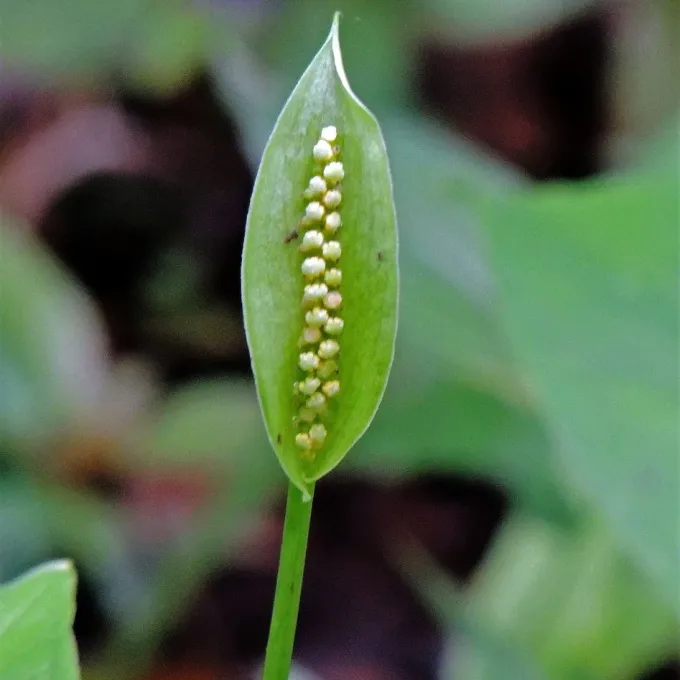
This species is characterized by its distinct hastate leaves and a unique inflorescence where the spadix is partially adnate to the spathe, creating a specialized reproductive structure.
For successful cultivation, the plant requires a high-humidity environment and a consistent temperature range, preferably between 22 and 28 degrees Celsius throughout the year.
The substrate must be highly porous, consisting of peat, bark, and perlite to ensure optimal gas exchange and moisture retention without risking root asphyxiation.
Lighting conditions should be kept at a moderate, diffuse level, as the plant is highly susceptible to leaf tissue damage from direct solar exposure.
Main diseases and pests
The primary threats to this plant are fungal pathogens, specifically those causing root rot, which are often triggered by waterlogged conditions and poor ventilation.
Spider mites are the most common pest associated with this crop, particularly in environments where humidity levels are not strictly maintained.
Mealybugs can also infest the plant, settling in the axils of the leaves, which necessitates regular manual inspection and cleaning of the plant foliage.
Management practices include maintaining excellent sanitation and ensuring that the foliage is kept clean of dust to improve photosynthetic efficiency and pest monitoring.
If chemical intervention is required, it is recommended to use systemic insecticides with caution, as Araceae species can be sensitive to specific potent chemical formulations.