
Sorghum nigricans
Sorghum nigricans
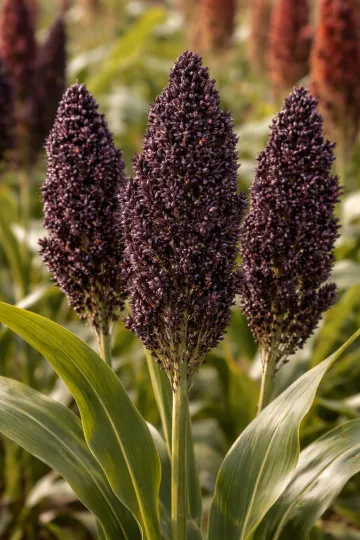
Description
Sowing dates
Sorghum nigricans is a warm-season crop, requiring soil temperatures to reach at least 12–15°C at a 10 cm depth before sowing can successfully occur.
The optimal planting window is determined by the arrival of stable spring warmth, which protects delicate seedlings from the risk of late frost damage.
Seeds are typically planted at a depth of 3–5 cm, depending on the soil moisture level and the specific texture of the seedbed at the time of planting.
Seeding rates depend on the final objective: grain production usually requires 150,000 to 200,000 seeds per hectare, while forage production may reach 400,000.
Utilizing a row-spacing of 70 cm is recommended as it facilitates aeration of the crop canopy and allows for efficient mechanical weed control during the season.
Growing requirements
Belonging to the Poaceae family, this crop is renowned for its high heat and drought resistance, traits inherited from its ancestral African environment.
Sorghum nigricans thrives in a variety of soil types, ranging from light sandy loams to heavier clay soils, although fertile chernozems produce the best results.
The plant exhibits high tolerance to soil acidity and salinity, making it an excellent choice for cultivating marginal or problematic agricultural land.
A minimum annual rainfall of 300–400 mm during the growing season is usually sufficient to secure a stable harvest, provided that distribution remains steady.
As a C4 photosynthetic plant, it requires abundant sunlight for maximum efficiency and rapid biomass accumulation throughout its developmental stages.
Yield
The yield of green forage from Sorghum nigricans can reach between 250 and 400 decitonnes per hectare under proper management and adequate moisture availability.
Grain yields vary significantly based on genetic potential and nutrient levels, generally ranging from 20 to 45 decitonnes per hectare in favorable environments.
Optimal productivity is achieved through the balanced application of nitrogen, phosphorus, and potassium fertilizers during critical growth stages of the plant.
The crop is highly valued for its strong regrowth capacity after harvesting, allowing for multiple cuttings of green mass within a single growing season.
Regular mechanical cultivation of rows helps maintain soil moisture, which serves as a decisive factor for yield stability during periods of summer drought.
Main diseases and pests
Young crops are most vulnerable to wireworms and false wireworms, which can significantly damage seeds and root systems in the early development stages.
Common pathological threats include various types of smut diseases, which can severely compromise both the quality and the quantity of the harvested grain.
High humidity conditions may promote bacterial infections and leaf spot diseases, which gradually inhibit vegetative growth and weaken the plant overall.
Aphids represent a substantial threat during the flowering phase, as they drain sap from leaves and panicles, often leading to organ deformation and stunted growth.
Integrated pest management strategies should include seed treatment with fungicides and prompt intervention when the first symptoms of infestation are detected.
Harvesting
For green forage, harvesting should occur during the heading stage, when the nutrient and sugar content within the stems is at its absolute peak.
For haylage production, the optimal harvest time is the milk-to-dough stage of grain development to ensure high digestibility and feed value for livestock.
Grain harvesting is performed upon reaching physiological maturity, targeting a moisture content of 14–16% to prevent spoilage and mold during storage.
The most effective method is direct combining using specialized headers designed to handle the structural characteristics of mature sorghum panicles.
Post-harvest processing involves thorough drying and cleaning to remove impurities, which is vital for maintaining grain quality over long-term storage periods.