
Sophora alopecuroides
Sophora alopecuroides
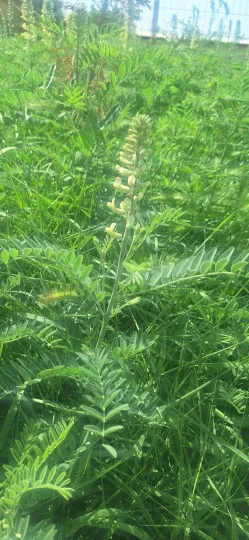
Description
Sowing dates
Sophora alopecuroides, commonly known as creeping sophora, is a perennial herbaceous plant from the Fabaceae family. It is widely recognized as a persistent, deep-rooted weed that propagates primarily through vegetative buds on its expansive rhizome system.
While seeds can germinate in the spring when soil temperatures reach 10–12°C, sexual reproduction is secondary to its vegetative spread. The seeds possess a hard, water-impermeable coat, allowing them to remain viable in the soil seed bank for many years.
Agricultural management is complex because tilling operations often fragment the root system. Each root segment has the potential to sprout, meaning that mechanical control without total extraction of the roots often exacerbates the infestation.
Chemical control is most effective when systemic herbicides are applied during the budding phase. At this time, the plant transports photosynthetic products downwards to the roots, which ensures the translocation of the herbicide into the storage organs.
Because the plant is capable of forming dense monocultures, it creates significant competition for moisture and nutrients with primary crops. Its aggressive nature requires an integrated approach combining chemical, mechanical, and cultural methods.
Growing requirements
This species is highly adaptable to a wide range of environments, exhibiting xerophytic characteristics that allow it to thrive in arid and semi-arid regions. It prefers well-drained soils, including saline and alkaline types where many other plants fail to establish.
The climate requirements are relatively broad, as the plant withstands extreme temperature fluctuations typical of continental climates. Its deep root system allows it to access subsoil moisture, making it remarkably drought-tolerant throughout the growing season.
Light exposure is a critical factor for the development of its canopy. While the plant can tolerate partial shade, it reaches maximum biomass in full-sun locations where photosynthesis can be maximized for rhizome storage.
Soil type does not significantly limit its distribution, as it performs well on sandy, loamy, and clay-rich soils. However, good soil aeration is preferred, as waterlogged conditions inhibit its root respiration and can lead to population decline.
The plant is extremely cold-hardy, with the underground rhizomes capable of surviving ground freezing during harsh winters. This resilience is a key factor in its status as a difficult-to-eradicate weed in agricultural landscapes.
Main diseases and pests
Sophora alopecuroides is subject to various fungal pathogens, particularly rust species that thrive in humid environments. These pathogens typically infect the leaves and stems, reducing the plant's overall vigor and photosynthetic capacity.
Insect pests such as weevils play a dual role by damaging both the foliage and the reproductive structures. While this can reduce seed production, it is rarely sufficient to eliminate the plant's dominance in a field.
In cases where the plant is harvested for medicinal purposes, management of pests is essential to ensure raw material quality. Preventative fungicide and insecticide applications are utilized to protect the yield from aesthetic and qualitative damage.
The resilience of the species makes it highly resistant to natural pest-induced mortality. Even after significant herbivore pressure, the plant's energy reserves in the roots allow for rapid recovery and regrowth in the subsequent season.
Despite these threats, the species remains a robust colonizer. Integrated pest management strategies in fields often focus on weakening the plant’s defense mechanisms rather than relying on a single biological control agent.