
Mountain soldanella
Soldanella montana
Description
Growing requirements
The mountain soldanella (Soldanella montana) is a perennial herbaceous plant belonging to the Primulaceae family. Its natural habitat is concentrated in the mountain ranges of Central and Southern Europe, particularly in the Alps, where it thrives in cool, moist, and shady alpine environments.
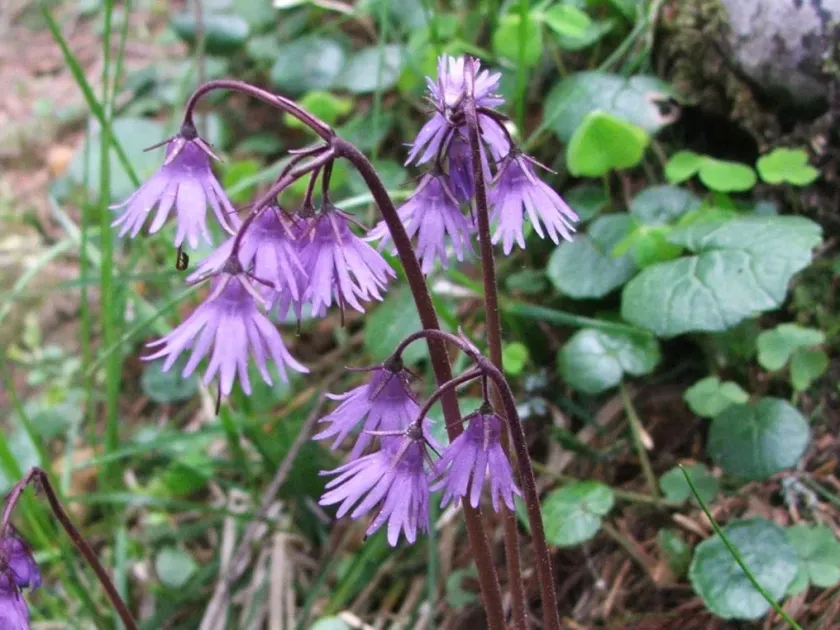
Botanically, this species is defined by a basal rosette of rounded, leathery leaves that persist throughout the growing season. The plant produces delicate, bell-shaped violet-blue flowers with distinctive fringed petals, typically appearing on slender scapes in early spring shortly after the snow melts.
Cultivation of this species requires mimicking alpine conditions. The plant performs best in partial shade, as it is sensitive to direct, intense summer sun which can easily dehydrate its shallow root system. Northern slopes in rock gardens provide the most suitable microclimate for its development.
The soil requirements are specific: the substrate must be well-drained, humus-rich, and slightly acidic. It is critical to ensure that moisture is consistent without ever allowing the soil to become waterlogged, as stagnant water is the primary cause of decline for this mountain native.
Good agricultural practice for Soldanella montana includes regular monitoring of soil moisture during the active growth phase. Applying a layer of fine gravel or chippings around the base of the plant helps maintain soil coolness and humidity while protecting the crown from excessive moisture.
Main diseases and pests
The primary threats to mountain soldanella are fungal diseases caused by poor drainage, particularly during winter or periods of high humidity. Root rot frequently occurs if the plant is left in heavy or waterlogged soil, which leads to rapid mortality of the entire plant.
Slugs and snails present a significant pest risk, as they are attracted to the succulent-like foliage and the delicate, early-blooming flowers. Protective measures, such as gravel barriers or environmentally friendly bait, are often necessary to keep these pests from damaging the leaves and blooms.