
Monk fruit
Siraitia grosvenorii
Description
Sowing dates
Monk fruit, scientifically known as Siraitia grosvenorii, is a perennial vine belonging to the Cucurbitaceae family, native to the mountainous regions of Southern China.
Cultivation of this species from seeds is challenging due to the dormancy of the embryo and low germination rates, requiring professional seed scarification and priming techniques.
Commercially, farmers prefer vegetative propagation through cuttings or root division to ensure the consistency of traits and faster plant maturation.
The seedlings must be planted in the field only after the frost season is completely over, as this tropical plant is highly sensitive to cold weather conditions.
Providing robust trellis systems is essential for the crop, as the vines require vertical support to thrive, preventing fruit rot and improving overall plant health.
Growing requirements
This crop thrives in specific subtropical microclimates, requiring high air humidity, filtered sunlight, and protection from intense direct heat during the peak of the day.
The optimal temperature range for active growth is between 20 and 28 degrees Celsius; extreme shifts in temperature can significantly impede the development of the vine.
Soil must be well-draining and rich in organic matter, with a neutral to slightly acidic pH, which is crucial for optimal nutrient uptake and healthy root system expansion.
Adequate irrigation is vital; the plant requires consistent moisture levels, yet over-watering must be avoided to prevent fungal infections and root decay issues.
Fertilization regimes should focus on a balanced supply of potassium and phosphorus to support the flowering phase and the development of high-quality fruit.
Yield
The yield of monk fruit is highly dependent on effective pollination; while insects aid in this, manual pollination is often performed in commercial settings to ensure higher set rates.
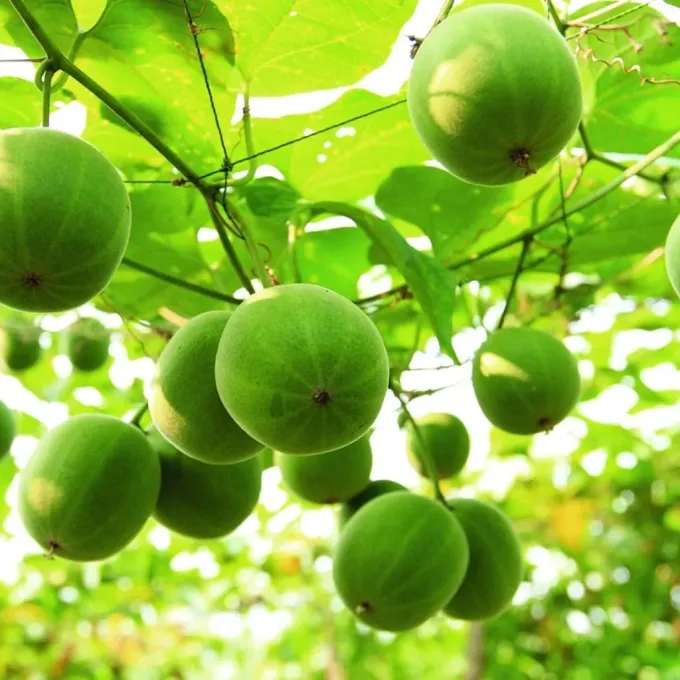
The fruit develops into round, velvety berries that turn from green to a dark brown hue upon reaching maturity, signaling the accumulation of sweet mogrosides.
The primary economic use of monk fruit is the extraction of mogrosides, which are natural, high-intensity sweeteners used widely in the food and beverage industry.
As a zero-calorie sugar substitute, monk fruit extract is highly valued by health-conscious consumers and individuals managing blood glucose levels, such as diabetics.
Modern processing facilities convert the harvested fruit into concentrated powders or liquid extracts, ensuring the valuable antioxidants and sweeteners are preserved for end-use.
Main diseases and pests
Common agricultural threats include aphid infestations and spider mite outbreaks, which target the foliage and can significantly reduce the photosynthetic capacity of the plant.
In humid conditions with poor ventilation, the vines are susceptible to powdery mildew and other fungal pathogens that can rapidly spread throughout a plantation.
Root rot remains a major threat caused by poor soil drainage; therefore, maintaining a strictly regulated moisture management system is the best preventative strategy.
Pest and disease control must prioritize organic and low-impact methods to ensure the fruit remains safe for use as a health-promoting food additive.
Regular monitoring of the vine density and pruning of excess foliage are necessary to ensure proper airflow, which helps in mitigating the spread of airborne spores.
Harvesting
Harvesting is a labor-intensive process performed manually, as the fruits on a single vine reach maturity at different intervals during the harvest season.
Harvesters look for the characteristic deep brown coloration and firm texture of the skin, which indicates the fruits have reached the appropriate sweetness levels.
Once gathered, the fruits are placed in ventilated crates to maintain quality and prevent moisture accumulation, which could lead to spoilage of the delicate fruit skin.
The harvested fruit must be processed or dried promptly, as fresh monk fruit has a limited shelf life and is highly perishable in warm tropical climates.
Efficient post-harvest handling, including temperature-controlled drying, is critical to maintaining the pharmacological potency of the mogrosides within the fruit.