
Siphocampylus comosus
Siphocampylus comosus
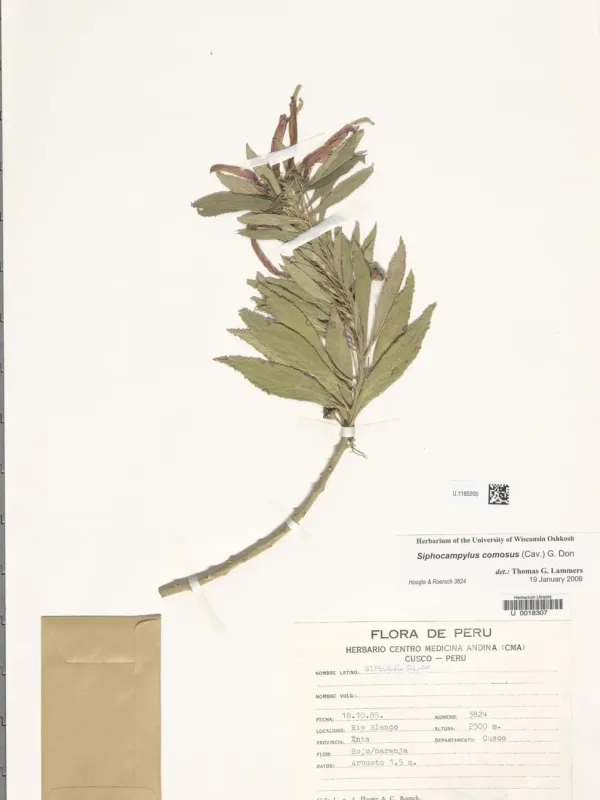
Description
Growing requirements
Siphocampylus comosus is an intriguing member of the Campanulaceae family, native to the high-altitude cloud forests of South America. Its common classification as a hardy exotic shrub makes it a specialized subject for ornamental horticultural studies.
Botanically, the plant is characterized by its distinct pubescent (hairy) stems and foliage. It develops tubular, elongated flowers that are evolutionary adaptations to avian pollinators, typical for many high-mountain tropical plant species in the Andean regions.
To cultivate this plant successfully, one must replicate its natural environmental conditions: a cool, stable temperature range and consistently high atmospheric humidity. It performs poorly in areas with significant seasonal heat or drought and prefers shaded or semi-shaded exposure.
The ideal growing medium should be highly aerated, acidic, and rich in organic matter. A mix consisting of sphagnum peat, perlite, and pine bark is recommended to promote root health while ensuring that excess water drains away efficiently to prevent root asphyxiation.
The agricultural use of this species is primarily focused on greenhouse production and indoor botanical collections. Successful management involves careful irrigation with soft water and balanced fertilization during the active growing season to ensure robust stem development.
Main diseases and pests
Pests such as spider mites and mealybugs are the most common threats, particularly in indoor environments where air circulation may be stagnant. Frequent inspections and the use of insecticidal soaps are recommended at the first signs of infestation.
Root rot caused by Phytophthora or Pythium species represents a critical threat when drainage is compromised. To minimize these risks, it is essential to ensure that the substrate dries slightly between waterings and that the pot has sufficient drainage capacity.