
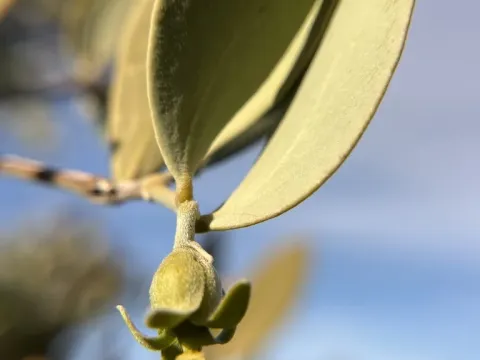
Simmondsia chinensis
Simmondsia
Simmondsia chinensis, commonly known as jojoba, is a resilient evergreen shrub belonging to the monotypic family Simmondsiaceae. The crop is primarily propagated from seeds, which should be planted in well-draining soil to ensure successful germination and root development.
What the section contains

Simmondsia chinensis
The ideal time for sowing is during the spring season when soil temperatures are consistently warm. Adequate but careful moisture management is crucial during the early stages of growth, as excessive water can lead to seed rot and impede the development of the taproot.
Germination typically occurs within two to four weeks depending on environmental conditions. During the first few years, the plant focuses its energy on deep root growth, resulting in slower above-ground development that requires patience and consistent monitoring from growers.
Commercial plantations often prefer using nursery-grown seedlings rather than direct seeding. This approach ensures higher survival rates and significantly reduces the time needed for the plantation to reach its reproductive phase, thereby improving overall farm efficiency.
Jojoba is dioecious, meaning individual plants are either male or female. Growers must ensure a specific ratio of male to female plants in the field to facilitate effective wind pollination, which is essential for achieving optimal seed yield.
As a natural xerophyte, jojoba is perfectly adapted to arid and semi-arid environments. It thrives in regions with hot, dry summers and can withstand extreme temperature fluctuations, making it a sustainable choice for challenging agricultural climates.
The crop prefers sandy or loamy soils with good aeration and a neutral to slightly alkaline pH. Heavy clay soils that retain excess water must be avoided, as jojoba is highly sensitive to root asphyxiation and fungal decay caused by poor drainage.
While jojoba is famously drought-tolerant, commercial production requires supplemental drip irrigation to maintain high yield levels. Precise water management during the flowering and seed-filling stages is critical for maximizing the quality and quantity of the liquid wax produced.
Full sun exposure is vital for the plant's metabolic processes and the synthesis of esters in the seeds. Shade or overcrowding leads to leggy growth and significantly reduces the productive capacity of the shrub, so spacing must be carefully planned.
Agronomic practices include periodic pruning to maintain a manageable plant shape and facilitate harvesting. Jojoba is efficient at utilizing soil nutrients, requiring relatively low levels of fertilization compared to traditional commodity crops.
The primary economic output of jojoba is its valuable liquid wax, commonly referred to as jojoba oil. This substance is chemically distinct from typical vegetable oils, as it is composed of long-chain esters that mimic human sebum, making it highly prized in global markets.
Plants generally begin producing seeds after three to four years, but commercial-scale harvests are typically achieved after seven to ten years of growth. With proper care, these shrubs can remain productive for over a century, offering a long-term investment for farmers.
In the cosmetic industry, jojoba oil is a staple ingredient for high-end skincare and haircare products. Its stability, non-greasy texture, and excellent absorption properties make it a premium raw material that commands a high market price.
Beyond cosmetics, the oil is utilized in pharmaceuticals, lubricants, and high-quality coatings. Its resistance to oxidation and heat makes it a superior alternative to synthetic petroleum-based oils in various industrial and technical applications.
The profitability of jojoba farming is further enhanced by its low input requirements and the durability of the crop. Once established, a jojoba plantation requires significantly fewer labor and chemical inputs than most traditional agricultural enterprises.
Jojoba is generally a hardy and pest-resistant crop; however, it can be affected by certain issues if grown in improper environmental conditions. Major threats include insect pests that target flowers and young seeds, as well as soil-borne pathogens triggered by poor drainage.
Spider mites and certain leaf-feeding larvae are the most common pests, particularly in hot, dry conditions. Growers can manage these effectively through integrated pest management (IPM) practices, emphasizing biological controls to preserve the crop's natural purity.
Root rot is the most significant disease threat to jojoba plantations, usually resulting from over-irrigation or planting in compacted soils. Ensuring optimal drainage and proper plant spacing are the best preventative measures against these destructive fungi.
Foliar diseases like leaf spots can occur if humidity levels are high and air circulation within the canopy is restricted. Proper pruning practices not only help with harvesting but also ensure the airflow needed to keep the shrub's foliage healthy and dry.
Overall, jojoba requires minimal pesticide and herbicide intervention. This natural resistance is a major advantage, allowing growers to produce a high-quality product while minimizing their impact on the surrounding ecosystem.
Harvesting takes place when the seed pods have dried and turned a characteristic dark brown color. At this stage, the seeds reach their maximum wax content, providing the best return on investment for the farmer.
In commercial operations, specialized mechanical harvesters are used to shake the shrubs and collect the seeds on catch frames. This modernization of the harvesting process has drastically reduced labor costs and improved the efficiency of large-scale jojoba cultivation.
After collection, the seeds are cleaned of debris and dried in well-ventilated areas to prevent mold or moisture-related spoilage. Proper post-harvest storage in a cool, dry place is essential to maintain the integrity of the wax for extended periods.
The oil is extracted using cold-press methods, which preserves the delicate molecular structure of the liquid wax. The remaining seed meal (press cake) is often repurposed as an organic fertilizer, further contributing to the sustainability of the farming process.
Advancements in post-harvest technology have made the purification and refining process more efficient, ensuring that the final oil product meets the stringent quality standards of the global cosmetic and industrial sectors.