
Jojoba
Simmondsia chinensis (Link) C. K. Schneid.
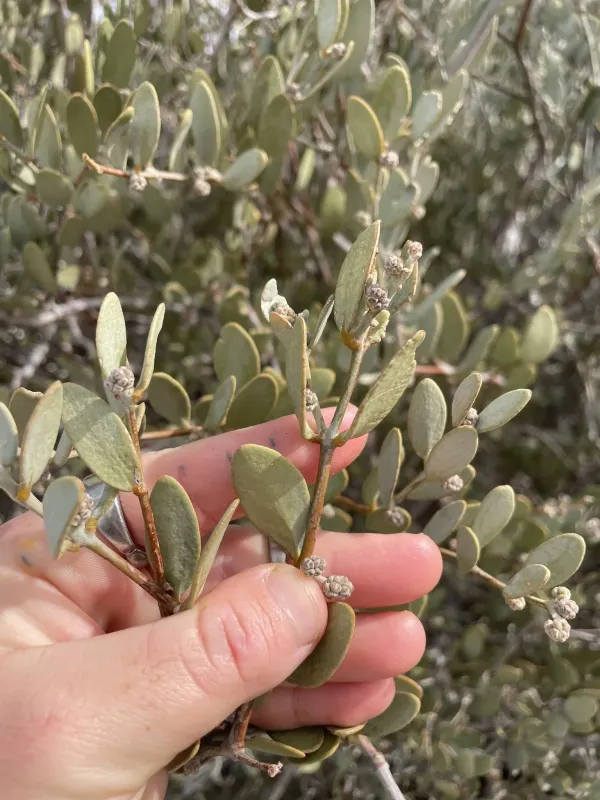
Description
Sowing dates
Sowing seeds of Simmondsia chinensis requires strict adherence to temperature conditions, as the crop is heat-loving. The optimal time for sowing is when the soil warms up to 20–25 degrees Celsius.
Seeds are sown at a depth of 3 to 5 centimeters, depending on the soil type. It is essential to ensure good contact between the seed and the moist substrate for uniform germination.
On an industrial scale, seeds are planted in pre-prepared furrows using specialized seeders. This allows for optimal plant density and growth spacing.
The first seedlings may emerge within 2–4 weeks after sowing, provided there is sufficient moisture. During the initial growth period, protecting young plants from weeds is critical.
For vegetative propagation, cuttings are rooted in a controlled greenhouse environment to ensure high survival rates before transplantation into the permanent field.
Growing requirements
Simmondsia chinensis, commonly known as jojoba, belongs to the Simmondsiaceae family. It is a perennial evergreen shrub capable of adapting to extremely arid environments.
Native to the desert regions of the Southwestern United States and Mexico, the plant has high light requirements and is exceptionally resistant to extreme heat.
The crop prefers well-drained sandy or sandy-loam soils with neutral to slightly alkaline pH levels. Waterlogging is fatal to jojoba roots.
For normal growth, the plant requires dry periods during flowering and fruit ripening. In regions with high humidity or frequent rainfall, the crop's productivity decreases significantly.
A crucial factor is its dioecious nature: male and female plants must be planted in a specific ratio within the plantation to ensure effective pollination.
Yield
Jojoba yield depends directly on the shrub's age and the quality of agricultural management. Commercial plantations begin to produce a harvestable yield 4–5 years after planting.
Full production capacity is reached around the 10th to 12th year of the plant's life. During this period, an adult shrub can yield between 1 and 3 kilograms of cleaned seeds annually.
Yield levels fluctuate significantly based on pollination success, which is heavily influenced by wind patterns and local pollinator activity.
Regular pruning helps maintain a compact shrub shape, which facilitates easier maintenance and improves the collection of seeds per unit area.
With correct planting schemes, yields per hectare can range from 500 to 1500 kilograms of seeds, making the crop economically viable for industrial use.
Main diseases and pests
Simmondsia chinensis possesses high natural resistance to many pests, thanks to the presence of specific protective compounds in its leaves and tissues.
However, under high humidity conditions, plants may be affected by root rot caused by fungi of the Phytophthora genus, usually resulting from poor drainage.
Pests that can cause damage to young plantations include certain grasshopper species and caterpillars that feed on foliage during the active growth phase.
Powdery mildew can occasionally occur if the canopy becomes too dense and lacks adequate air circulation, creating a favorable microclimate for the infection.
To combat these threats, agronomists recommend maintaining a precise irrigation schedule and conducting regular inspections to detect and treat outbreaks early.
Harvesting
Harvesting jojoba is a mechanized process. Seed maturity is indicated by the cracking of the seed capsule and the shell changing color to dark brown.
Since fruit ripening on a single bush occurs unevenly, multiple passes with harvesting equipment through the plantation are often required.
After collection, the fruits require drying in specialized chambers or under the sun until the moisture level of the seeds is safe for long-term storage.
Seed cleaning, involving the removal of debris and foreign matter, is performed through separation systems to ensure high-quality raw material for processing.
Storage must take place in well-ventilated, dry facilities to prevent mold growth and maintain the quality of the valuable liquid wax stored within the seeds.