
Siebera nana
Siebera nana
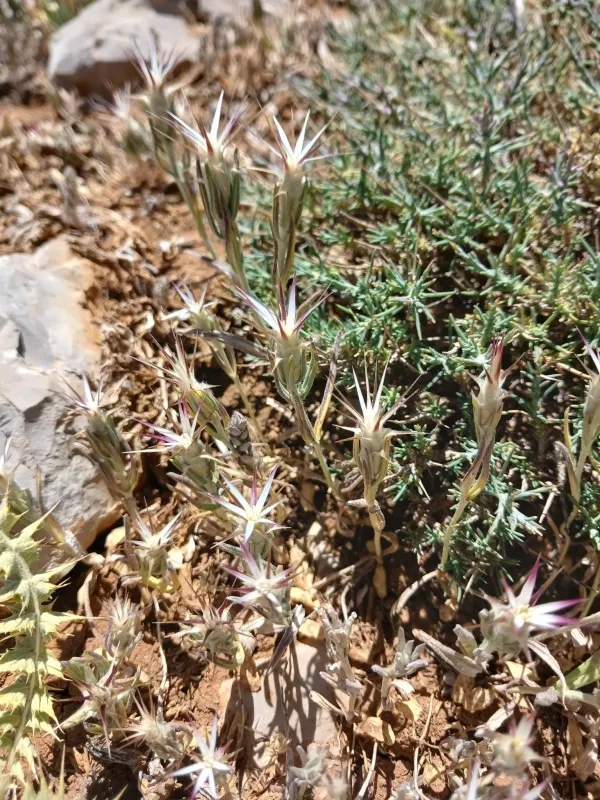
Description
Sowing dates
Siebera nana is a specialized herbaceous plant belonging to the Asteraceae family. It is primarily adapted to arid and semi-arid environments, characterizing it as a unique species within the broader context of agricultural plants suited for extreme climate zones.
The optimal sowing time for Siebera nana is early spring. Given its lifecycle as an ephemeral plant, it relies on the moisture content available immediately following the winter snowmelt or the first spring rains to successfully establish its root system.
Regarding planting depth, the seeds of Siebera nana should be placed at a shallow depth of approximately 1 to 2 centimeters. Because the seeds are small, they lack the reserve energy to emerge from deeper soil layers, necessitating precision during the sowing operation.
Successful germination often requires a period of cold stratification. In practical agricultural terms, this means that exposing the seeds to low winter temperatures is beneficial for breaking seed dormancy and ensuring a uniform emergence once the soil warms up in the spring.
Spacing should be managed to ensure adequate ventilation and light penetration. While the plant is low-growing, overcrowding can lead to increased humidity levels around the base of the plant, which may trigger pathological issues that are detrimental to the crop’s development.
Growing requirements
Siebera nana requires full solar exposure throughout its growth cycle. It is highly intolerant of shade, and even minor shading from adjacent taller plants can significantly reduce its photosynthetic efficiency and overall biomass production potential.
The ideal soil profile consists of well-draining, light-textured soils such as sandy loams or gravelly mixtures. The plant is highly sensitive to waterlogged conditions, which lead to rapid root degradation and death of the plant population under cultivation.
Drought tolerance is a defining characteristic of this species. It has evolved physiological mechanisms to regulate its water usage during periods of low rainfall, making it a potential candidate for research in low-input agriculture within arid regions.
The plant thrives in regions characterized by wide diurnal temperature fluctuations. While it tolerates heat well, the most active growth phases occur when ambient temperatures are moderate, typically during the peak of the spring season before the arrival of intense summer heat.
Nutrient requirements are relatively modest. Siebera nana is adapted to nutrient-poor soils, and excessive application of chemical fertilizers is generally discouraged, as it may disrupt the plant’s natural physiological balance and induce unwanted succulent growth.
Main diseases and pests
Root rot, primarily caused by fungal pathogens such as Fusarium species, represents the most significant threat to the crop. This risk is exponentially increased if the soil drainage is inadequate or if there is persistent moisture in the upper soil horizon.
Pest management should focus on early monitoring. Sucking insects and small herbivores can damage the young foliage of the plant. Integrated pest management (IPM) strategies, favoring biological controls over heavy chemical usage, are highly recommended for this specific crop.
Weed competition poses a substantial threat during the early emergence phase. Because Siebera nana is a slow-growing plant initially, weeds can easily outcompete it for essential resources like light and water, requiring manual or selective mechanical weeding.
Foliar diseases, including mildew, may occur if the planting density is too high or if the air circulation between plants is insufficient. Maintaining adequate distance between rows is a simple but effective cultural practice to mitigate the spread of such fungal issues.
- Implementation of a strict crop rotation schedule.
- Avoidance of over-irrigation during cool, overcast weather periods.
- Early detection of pest colonization in the seedling stage.