
Shepherd's purse
Capsella bursa-pastoris (L.) Medik.
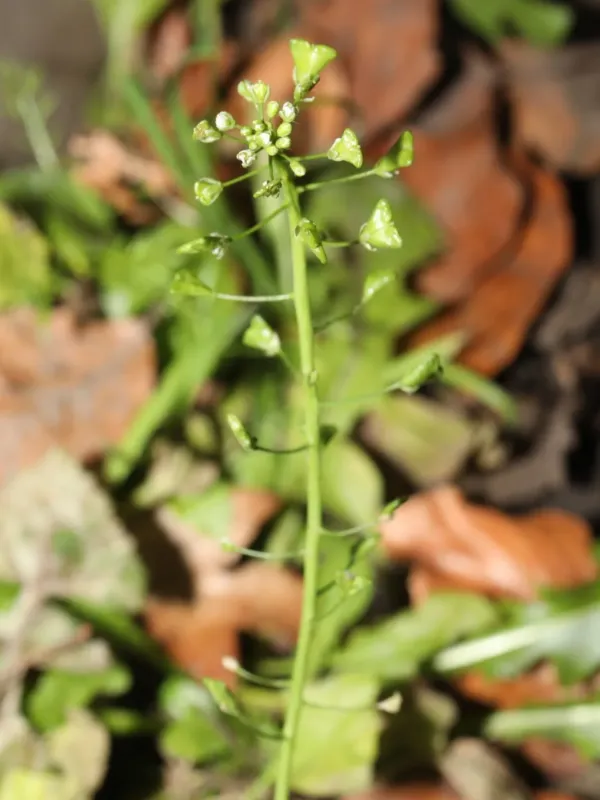
Description
Sowing dates
Shepherd's purse is primarily a wintering or spring annual plant known for its prolific seed production. Germination begins in early spring as soon as soil temperatures reach 2–4 degrees Celsius.
The plant is capable of producing several generations within a single growing season, making it a highly resilient presence in agricultural systems. In temperate climates, mass emergence occurs in March-April and again in late summer.
Seeds remain viable in the soil for decades, which requires careful planning in crop rotation strategies. For sowing, the optimal depth is 1–2 cm, as the tiny seeds require minimal soil coverage to sprout efficiently.
Adequate soil moisture is crucial for uniform germination. In commercial cultivation for medicinal use, the crop is sown in rows with a spacing of 15–20 cm to facilitate management.
An optimal density for producing high-quality biomass is about 150–200 plants per square meter. This density helps the crop outcompete other weeds in the field.
Growing requirements
Belonging to the Brassicaceae family, Shepherd's purse exhibits remarkable ecological plasticity. It thrives in various soil types, ranging from fertile chernozem to nutrient-poor sandy or loamy soils.
The plant prefers well-lit areas, as shade significantly reduces its metabolic activity and the accumulation of vital active compounds in its aerial parts.
The optimal soil pH range for development is 6.0–7.5. Growth is significantly stunted in waterlogged or overly acidic soil conditions, which limits the plant's productivity.
Shepherd's purse is highly frost-tolerant; its rosettes can survive temperatures as low as -10 to -15 degrees Celsius, maintaining its capacity for rapid growth when conditions improve.
While the plant is not overly demanding regarding mineral nutrition, it responds well to nitrogen applications during the rosette stage, which stimulates vigorous foliage development.
Yield
When grown commercially, the biomass yield can reach 30–50 decitonnes per hectare for fresh material. The output of dried raw material is typically 20-25% of the fresh weight.
Harvest timing is critical for high yields; harvesting must occur before the stems turn coarse or lower leaves yellow. Multiple harvests per season are possible if moisture levels are adequate.
A single plant can produce up to 50,000 seeds, making it one of the most prolific species in the field. This high reproductive rate requires strict management to prevent unwanted spreading.
The economic value depends on precise adherence to harvest schedules, as the quality is determined by the concentration of flavonoids, tannins, and organic acids.
Ensuring crop purity is essential for industrial production, as contamination with other species can degrade the pharmaceutical quality of the harvested biomass.
Main diseases and pests
Shepherd's purse is susceptible to common Brassicaceae diseases, including downy mildew and white rot. Under high-humidity conditions, Alternaria blight may also become a concern.
Among pests, crucifer flea beetles pose the greatest risk, potentially devastating young seedlings. Rape beetles and aphids are also commonly observed pests in these fields.
Preventative measures, such as maintaining spatial isolation from other Brassicaceae crops and implementing balanced crop rotation, are the most effective management tools.
For medicinal purposes, the use of insecticides is heavily restricted. Priority is given to agronomical monitoring and preventative measures to maintain the purity of the medicinal product.
Regular field scouting allows for early detection of pest outbreaks, enabling localized interventions that minimize losses without excessive chemical applications.
Harvesting
Harvesting for medicinal use is performed during the peak flowering period when the concentration of bioactive compounds is highest, typically in late spring or early summer.
The plants are mowed 5–10 cm above the soil surface. Under favorable conditions, several cuts can be made within a single growing season to maximize output.
Collected biomass must be transported quickly to drying facilities to prevent heat buildup and quality degradation. Drying should occur in the shade or in specialized dryers at temperatures not exceeding 40 degrees Celsius.
The final product should have a natural green color and a faint, characteristic scent. Storage requires dry, well-ventilated conditions using paper or fabric packaging.
Strict cleaning of the harvested material to remove soil, roots, and foreign plant matter is essential to ensure a high-quality final pharmaceutical product.