
Sesbania virgata
Sesbania virgata
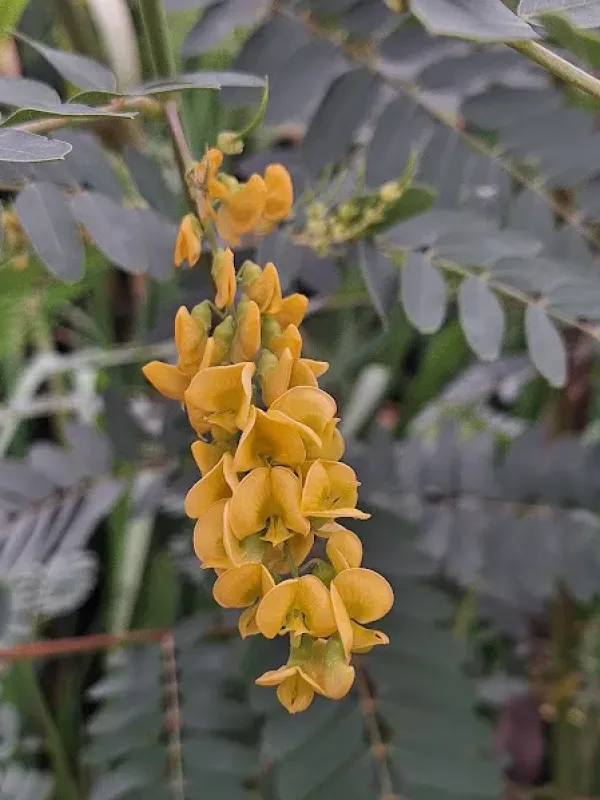
Description
Sowing dates
Sesbania virgata, a member of the Fabaceae family, is a versatile shrubby legume native to the tropical and subtropical regions of South America. It is increasingly recognized for its resilience and ability to thrive in challenging soil conditions where other leguminous crops may fail to establish.
Sowing typically takes place during the warm season, as the plant requires stable temperatures for germination and early vegetative development. Before planting, it is highly recommended to scarify the seeds to overcome physical dormancy, which significantly improves the uniformity and speed of emergence.
The seeding density is adjusted based on the intended use, whether it is for biomass production, erosion control, or soil improvement. Row planting is generally preferred to facilitate weeding during the establishment phase, as young seedlings can be slow to compete with vigorous weeds.
A key aspect of successful sowing is the inoculation of seeds with specific strains of rhizobia bacteria. This symbiotic relationship is crucial for effective nitrogen fixation, which in turn reduces the need for synthetic nitrogen fertilizers throughout the plant's life cycle.
The plant features a deep taproot system, which allows it to penetrate compacted soil layers and access deeper water resources. This biological advantage makes it particularly useful for sites with poor soil structure or degraded land that requires restoration before returning to intensive agricultural use.
Growing requirements
Sesbania virgata is a heliophilous species that requires full sun exposure to achieve maximum growth potential. It is highly sensitive to shade, and its productivity drops significantly when grown under the canopy of larger trees or in high-density systems that restrict light access to the lower stems.
The plant exhibits remarkable tolerance to moisture-rich environments, including occasional flooding or waterlogged soil. This trait distinguishes it from many other legumes and makes it an ideal candidate for low-lying areas or regions experiencing heavy seasonal rains that would otherwise cause root rot in more sensitive crops.
Regarding soil fertility, it is adaptable to a wide range of pH levels, though it performs best in well-drained loamy soils. Its ability to tolerate low-fertility soils is largely attributed to its effective symbiotic nitrogen fixation, which sustains the plant's nutritional requirements.
While the plant is drought-tolerant once established, supplemental irrigation during the initial weeks after sowing can significantly enhance the stand establishment. Maintaining adequate moisture during the early growth stages ensures a deep root system that will eventually make the plant resilient to subsequent dry spells.
Temperature sensitivity is a limiting factor for this perennial shrub. In regions with freezing winters, Sesbania virgata is often treated as an annual crop. Proper management of the planting window is essential to ensure the plant reaches peak biomass accumulation before the onset of the cold season.
Yield
The biomass yield of Sesbania virgata is impressive, often resulting in high quantities of nitrogen-rich organic matter. As a green manure, it is highly valued for its ability to improve soil health by increasing the content of organic carbon and facilitating the cycling of nutrients within the soil profile.
In fodder systems, the plant serves as a protein source for livestock. However, producers must be aware of potential antinutritional factors and should introduce the foliage gradually into the diet. Many farmers use it as a supplement to grass-based diets to balance the nutritional profile for better livestock performance.
Phytoremediation is one of the most innovative uses of this species. Its deep roots and high metabolic activity make it effective at extracting heavy metals from contaminated soils, helping to reclaim degraded industrial or agricultural sites for future safety and productivity.
The plant's ability to fix atmospheric nitrogen makes it a superior companion crop or rotational partner in sustainable agricultural systems. By incorporating it into a rotation, farmers can significantly reduce their dependence on synthetic fertilizers and improve the quality of their soils over several seasons.
Harvesting for fodder or green manure should be timed to maximize nutrient content. Usually, the best results are obtained by harvesting before the plant reaches full lignification, which ensures better digestibility of the biomass and faster decomposition if incorporated into the soil as organic fertilizer.
Main diseases and pests
Pest management for Sesbania virgata primarily involves monitoring for common legume pests, such as leaf-eating beetles and weevils. These insects can damage the canopy during the peak growth season, potentially reducing the overall photosynthetic capacity of the stand if left unmanaged.
Fungal pathogens, particularly those affecting the roots, represent the most significant threat under conditions of persistent soil saturation combined with cool temperatures. Proper drainage management and the use of healthy, disease-free seed lots are the first lines of defense against such issues.
Viral diseases, often spread by aphid vectors, can cause plant stunting and reduced yields. Strategies to mitigate these risks include maintaining weed-free buffers around the fields and encouraging the presence of natural predators to control aphid populations before they reach economic thresholds.
Root-knot nematodes can be problematic in lighter, sandy soils. If nematode presence is suspected, a crop rotation strategy using non-host plants or cover crops that suppress nematode populations is essential to maintain soil health for future Sesbania plantings.
Despite these potential threats, Sesbania virgata is generally considered a robust species with a strong natural defense mechanism. Most management issues can be effectively controlled through good agronomic practices, including proper site selection and maintaining a healthy plant population that quickly outgrows its competitors.