
Sesbania sudanica
Sesbania sudanica
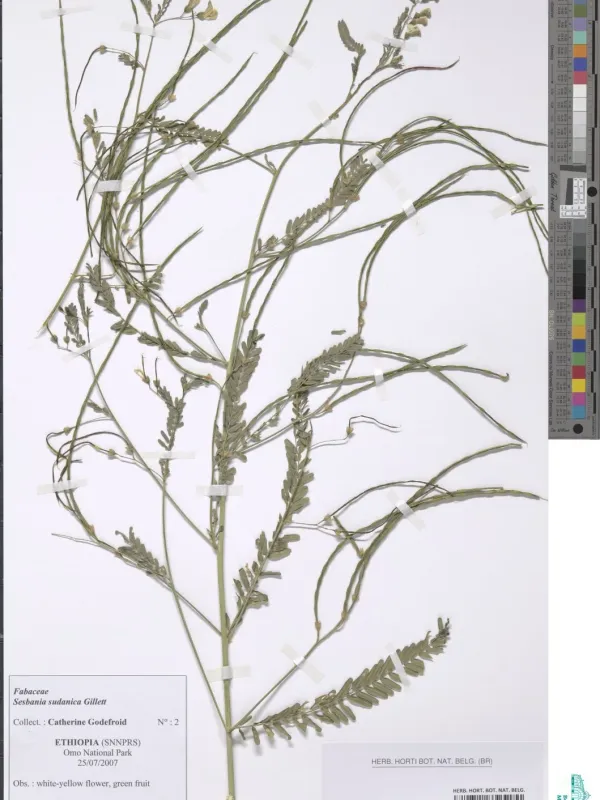
Description
Sowing dates
Sesbania sudanica is a heat-loving crop, so planting should only take place after stable soil temperatures have been established, eliminating any risk of frost.
The optimal time for sowing is at the beginning of the rainy season, which ensures the necessary moisture for uniform germination and rapid initial growth of the seedlings.
Seeds are sown in rows, with spacing depending on the purpose of cultivation: dense spacing is preferred for biomass production, while wider spacing is used for seed multiplication.
The sowing depth typically ranges from 2 to 4 centimeters, depending on the soil texture and the moisture content of the field at the time of planting operations.
Pre-sowing treatment, including scarification, significantly improves germination rates, as the seeds of this species possess a hard coat that slows down water absorption.
Growing requirements
This legume species thrives in well-drained, fertile soils but shows impressive adaptability to poor or even slightly saline environments typical of its native range.
The crop is highly light-demanding and performs poorly in shaded areas, requiring as much direct sunlight exposure as possible throughout the day for vigorous development.
Sesbania sudanica demonstrates excellent tolerance to temporary waterlogging and occasional flooding, making it a reliable choice for regions with monsoon climate patterns.
The optimal temperature range for vegetative growth is between 25 and 35 degrees Celsius; growth slows down significantly if temperatures drop below 15 degrees Celsius.
Effective nitrogen fixation is crucial for this crop, requiring the presence of specific rhizobia bacteria in the soil to provide adequate nutrition without heavy reliance on fertilizers.
Yield
The green biomass yield of Sesbania sudanica is significant, making it an excellent candidate for use as organic green manure to improve soil structure and fertility.
When managed correctly, the crop forms a robust stem structure quickly, often reaching several meters in height by the time it reaches the flowering stage.
Under intensive irrigation and balanced phosphorus-potassium fertilization, biomass yields can reach 30 to 50 tons per hectare in optimal tropical conditions.
The seed production capacity is also substantial, allowing farmers to maintain a sustainable supply of planting material for subsequent agricultural seasons.
To maximize biomass harvesting, it is recommended to mow the crop before the stems become overly lignified, ensuring the highest nutrient concentration in the young tissue.
Main diseases and pests
Common pests include various leaf-eating insects and weevils, which can cause significant damage to young stands during the seedling establishment phase.
Root-knot nematodes pose a serious threat, especially in light sandy soils, necessitating a proper crop rotation plan with non-host crops to suppress soil-borne parasites.
Fungal diseases, such as leaf spot and anthracnose, are frequently observed during periods of high air humidity and poor air circulation within the plant canopy.
Root rots can become a critical issue if the crop is cultivated in waterlogged soils, as poor drainage encourages the proliferation of soil-borne pathogenic microorganisms.
Integrated pest management, including the use of resistant varieties, seed treatment, and thorough field sanitation, is essential for minimizing potential yield losses.
Harvesting
The timing of harvest depends on the specific end-use: for green manure purposes, mowing should occur immediately before the onset of mass flowering.
If the cultivation goal is seed production, harvest should be delayed until the pods turn brown and the seeds reach their full maturity and hardness.
Mechanical harvesting of biomass is performed using rotary mowers or shredders, which facilitate rapid incorporation of the plant material into the soil profile.
After mowing, the green mass should be incorporated into the soil immediately to prevent nitrogen volatilization and to promote rapid decomposition by soil microorganisms.
For seed production, pods require careful drying in well-ventilated areas to prevent fungal contamination and ensure the viability of the stored seeds.